
Decentralized exchanges (DEXs) on Arbitrum have fundamentally changed the trading landscape for DeFi users. By combining Ethereum’s robust security with Arbitrum’s high throughput and low fees, these platforms deliver a seamless trading experience that is both cost-effective and lightning-fast. As of September 20,2025, the competition among top DEXs on Arbitrum is more intense than ever, with protocols like GMX, Uniswap v3, Camelot DEX, and others vying for liquidity, volume, and user trust.
GMX: The Benchmark for Perpetual Trading on Arbitrum
GMX remains the undisputed leader among Arbitrum DEXs in 2025. With its current price at $15.47, GMX continues to attract traders seeking both spot and perpetual markets with up to 100x leverage. What sets GMX apart is its innovative multi-asset liquidity pool design, which allows users to trade directly against an automated market maker (AMM) rather than relying solely on order books. Prices are sourced from Chainlink oracles and aggregated from top exchanges for accuracy and security.
Liquidity providers on GMX benefit from a diversified fee structure: they earn from swaps, leveraged trades, and market making. The platform’s governance token (GMX) enables stakers to receive a share of platform revenue - a model that has proven resilient even as new competitors emerge. For an in-depth look at how GMX integrates with Arbitrum’s tech stack and Chainlink oracles, see this analysis.
Uniswap v3 (Arbitrum) vs Camelot DEX: Concentrated Liquidity and Custom Pools
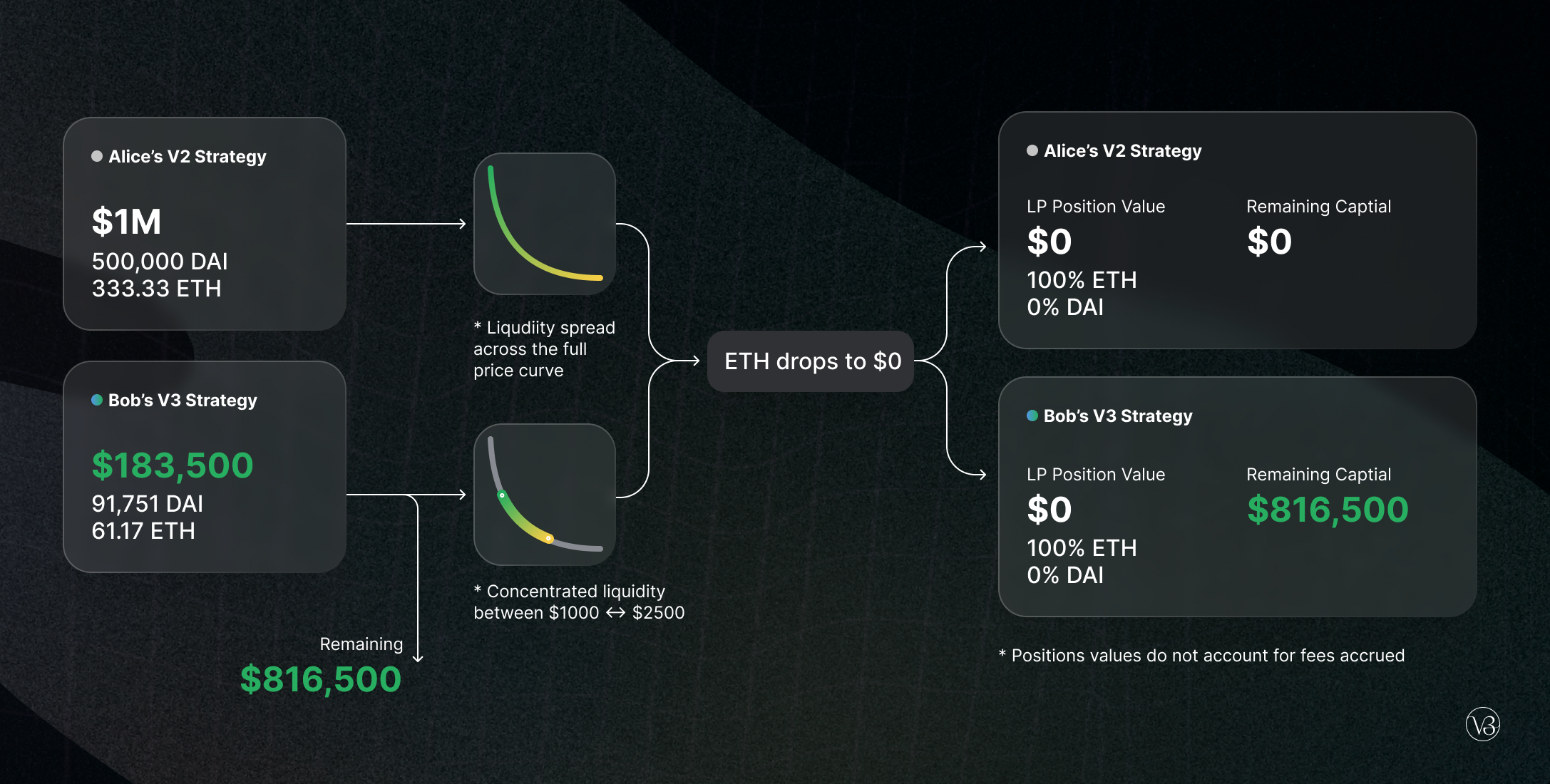
While GMX dominates the perpetuals market, Uniswap v3 on Arbitrum is the go-to choice for spot swaps thanks to its concentrated liquidity model. Liquidity providers can specify custom price ranges for their capital, optimizing yield while minimizing impermanent loss risk. This flexibility has made Uniswap v3 a staple for both retail traders and institutional players seeking efficient swaps across thousands of token pairs.
Camelot DEX, meanwhile, has carved out its own niche by offering highly customizable liquidity pools tailored to emerging projects on Arbitrum. Camelot’s focus on community-driven launches and protocol-owned liquidity attracts innovative DeFi teams looking for deeper integration within the ecosystem. This agility makes Camelot particularly appealing during periods of rapid protocol growth or when new tokens are gaining traction.
Uniswap v3 vs Camelot DEX: Feature Comparison
- Uniswap v3 (Arbitrum): Automated Market Maker (AMM): Utilizes concentrated liquidity, allowing liquidity providers to allocate capital within custom price ranges for greater capital efficiency. Multi-Asset Support: Supports a wide range of ERC-20 tokens on Arbitrum, benefiting from deep liquidity and high trading volumes. Fee Tiers: Offers multiple fee tiers (0.05%, 0.3%, 1%) for different trading pairs, giving LPs flexibility. Protocol Maturity: As a leading DEX, Uniswap v3 is battle-tested, with robust security and a large user base. Governance: Managed by UNI token holders, with governance proposals for protocol upgrades.
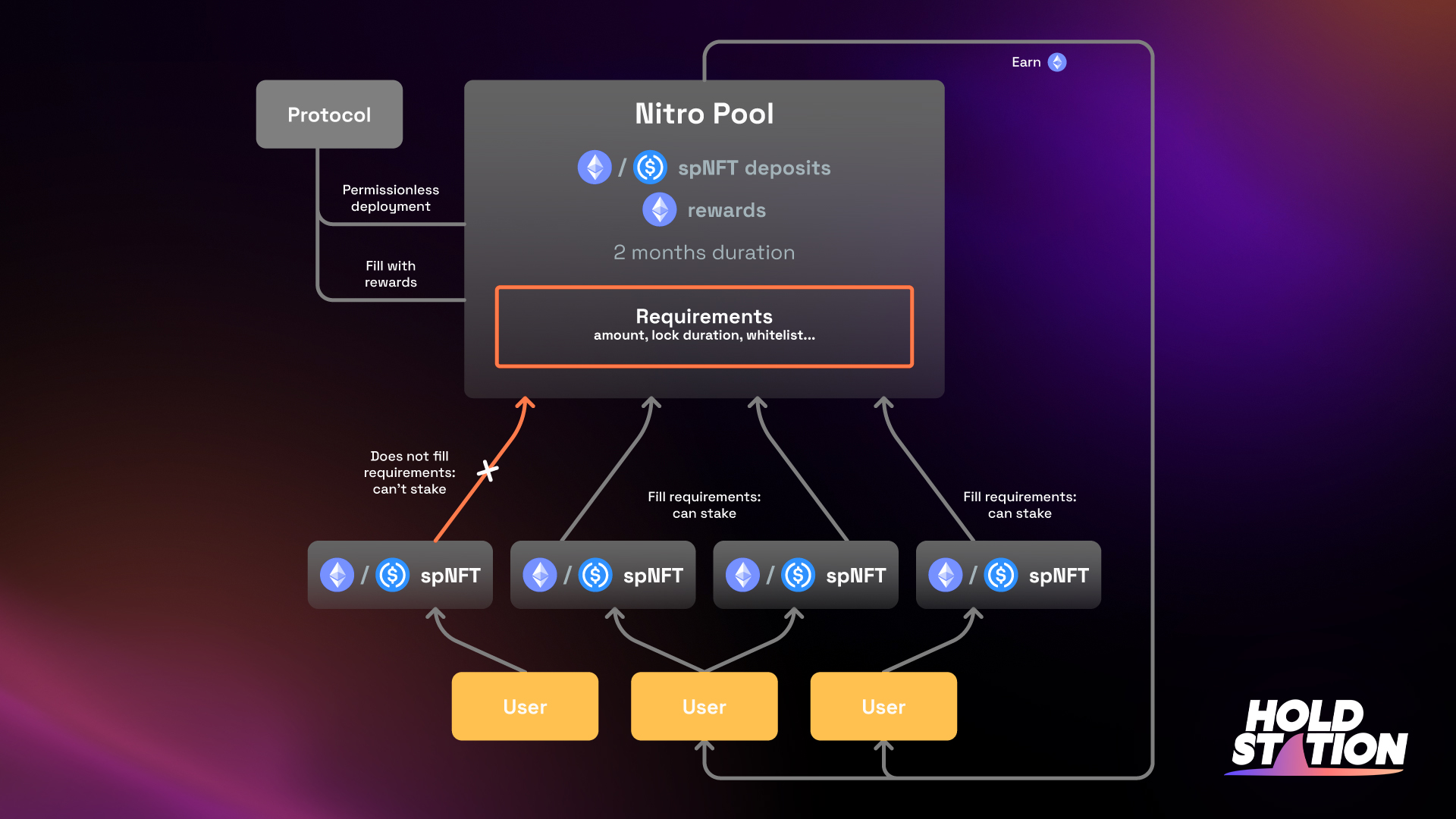
- Camelot DEX: Native Arbitrum DEX: Built specifically for Arbitrum, Camelot offers fast, low-fee swaps and a tailored user experience for the network. Dual AMM Model: Features both volatile and stable pools, optimizing trading for different asset types. Yield Opportunities: Provides innovative yield farming and launchpad features (Nitro Pools) for new projects on Arbitrum. Flexible Fee Structure: Allows projects to set custom trading fees, encouraging ecosystem growth. Governance: Uses the GRAIL token for protocol governance and community incentives.
SushiSwap (Arbitrum), Balancer (Arbitrum), Radiant Capital: Expanding the DeFi Toolkit
SushiSwap, once synonymous with yield farming mania, has evolved into a multi-chain powerhouse with significant activity on Arbitrum. SushiSwap offers classic AMM pools as well as innovative features like Onsen rewards and Kashi lending markets - giving users more ways to earn yield beyond simple swaps.
Balancer (Arbitrum) brings programmable liquidity to the network by allowing up to eight tokens per pool with custom weightings. This flexibility lets DAOs manage treasuries more efficiently or create index-like products without leaving Arbitrum’s fast settlement layer.
Radiant Capital, while not strictly a DEX in the traditional sense, acts as a cross-chain money market that enables users to supply assets as collateral across multiple blockchains including Arbitrum. Its integration with major exchanges like GMX creates powerful composability loops where users can borrow against LP positions or trading profits without leaving the ecosystem.
The Broader Landscape: Trader Joe, Curve Finance, KyberSwap Elastic and Ramses Exchange
The diversity of DEX offerings on Arbitrum doesn’t stop there:
- Trader Joe (Arbitrum): Known for its user-friendly interface inherited from Avalanche origins; now brings fast swaps and farming opportunities tailored for ARB-native assets.
- Curve Finance (Arbitrum): Excels at stablecoin trading through low-slippage pools; critical infrastructure as USDC/USDT demand grows.
- KyberSwap Elastic (Arbitrum): Offers dynamic market-making tools enabling granular control over LP positions - ideal for sophisticated DeFi traders seeking edge in volatile conditions.
- Ramses Exchange: An emerging contender focused on incentivized liquidity mining programs designed specifically for new token launches within the Arbitrum ecosystem.
GMX Price Prediction vs Competitors (2026-2031)
Forward-looking price analysis for GMX (GMX) token in the context of Arbitrum's evolving DEX landscape, factoring in competitive pressures from Mycelium, Gains Network, and Vela Exchange.
| Year | Minimum Price (Bearish) | Average Price (Base) | Maximum Price (Bullish) | Y/Y % Change (Avg) | Scenario Insights |
|---|---|---|---|---|---|
| 2026 | $11.00 | $17.50 | $28.00 | +13% | Market matures; regulatory clarity improves. GMX retains strong TVL but faces rising competition. Volatility remains high. |
| 2027 | $9.50 | $19.80 | $33.00 | +13% | Competitors grow, but GMX innovates with new products. DeFi adoption increases, but macro headwinds possible. |
| 2028 | $8.70 | $22.40 | $41.00 | +13% | Layer-2 DeFi expands. Institutional involvement rises. GMX leverages cross-chain opportunities. |
| 2029 | $7.80 | $25.30 | $49.00 | +13% | DeFi mainstreaming accelerates. GMX upgrades tokenomics, but faces intense competition from AI-driven DEXs. |
| 2030 | $7.00 | $28.60 | $58.00 | +13% | Global regulatory harmonization boosts market. GMX remains a top-3 DEX. Innovations in perpetuals and staking. |
| 2031 | $6.50 | $32.30 | $68.00 | +13% | DeFi reaches mass adoption. GMX explores new verticals but faces disruptive tech. Price volatility persists. |
Price Prediction Summary
GMX is forecasted to maintain its leadership among Arbitrum DEXs through 2031, with the average price rising steadily from $17.50 in 2026 to $32.30 in 2031. The token's price will be shaped by ongoing innovation, competitive pressures, and evolving regulatory environments. While bearish scenarios could see GMX drop towards $6.50 if market or regulatory headwinds intensify, bullish conditions—driven by DeFi growth and technical advancements—could propel prices as high as $68.00 by 2031.
Key Factors Affecting GMX Price
- Competitive landscape: Mycelium, Gains Network, Vela Exchange, and other DEXs on Arbitrum.
- DeFi adoption rates and user growth on Layer-2 solutions.
- Regulatory developments affecting DEX operations and token utility.
- GMX's continued product innovation, tokenomics upgrades, and cross-chain expansion.
- Market cycles: macroeconomic trends, crypto bull/bear cycles, and liquidity flows.
- Technological improvements in trading efficiency, security, and composability.
- Institutional adoption of decentralized derivatives and perpetual trading platforms.
Disclaimer: Cryptocurrency price predictions are speculative and based on current market analysis. Actual prices may vary significantly due to market volatility, regulatory changes, and other factors. Always do your own research before making investment decisions.
The Competitive Edge: What Sets Each Platform Apart?
The battle among these top ten DEXs is not just about volume but also about innovation in liquidity incentives, capital efficiency, composability, and user experience design. While GMX leads in perpetual contracts thanks to its zero price impact trades and robust oracle integrations, Uniswap v3 redefines spot trading efficiency through concentrated liquidity strategies. Camelot DEX empowers emerging projects via flexible launch mechanics; SushiSwap adds breadth via lending/borrowing features; Balancer introduces programmable pools; Radiant Capital unlocks cross-chain collateralization; Trader Joe makes onboarding seamless; Curve ensures stablecoin depth; KyberSwap Elastic appeals to advanced LPs; Ramses Exchange supports early-stage protocol growth.
As DeFi matures on Arbitrum, the nuances between these platforms become essential for both traders and liquidity providers. GMX continues to set the pace for perpetual trading, but each competitor brings a unique value proposition that shapes how users interact with decentralized finance in 2025.
Liquidity, Fees, and Innovation: How Arbitrum DEXs Stack Up
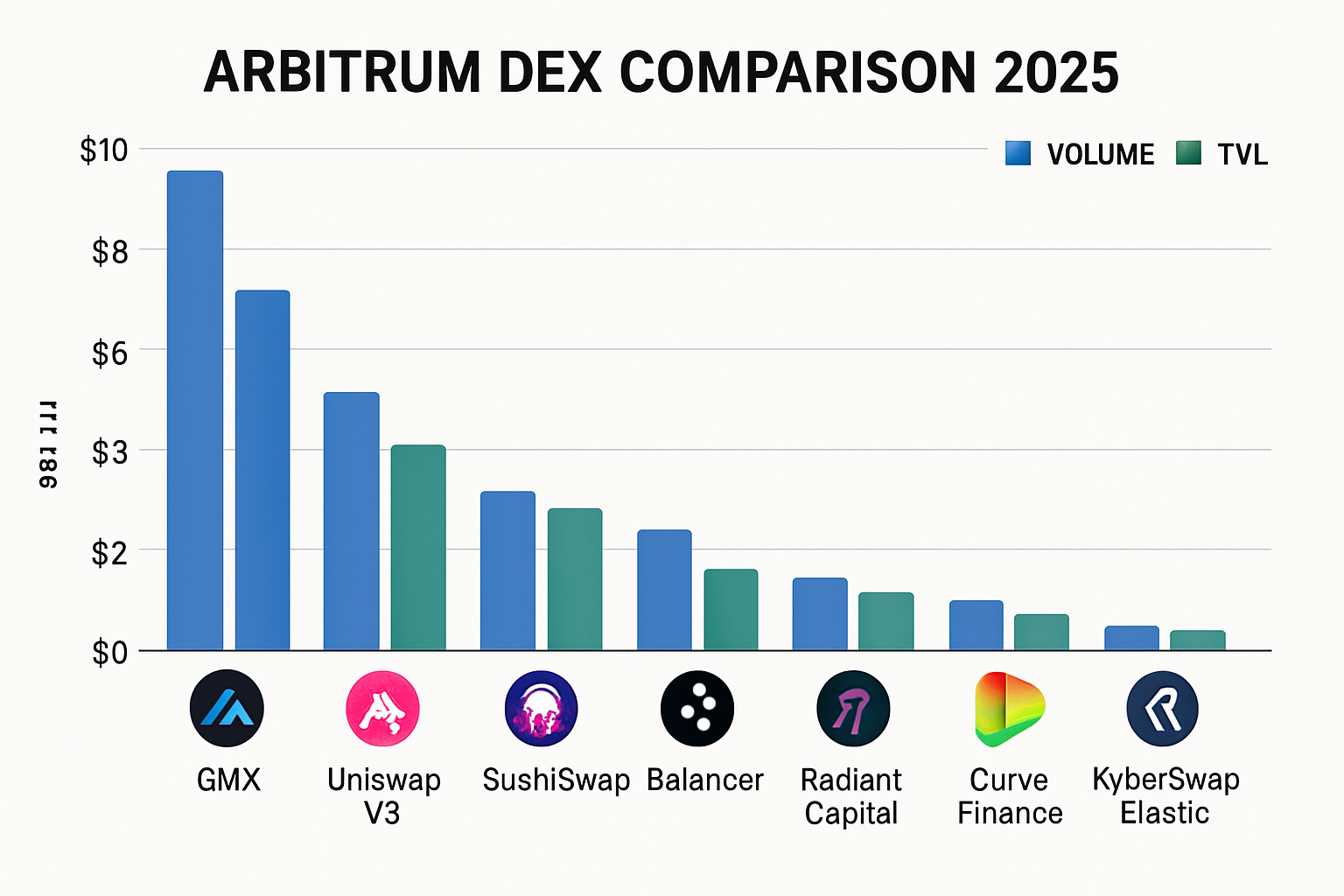
When comparing the top 10 DEXs on Arbitrum, three themes consistently emerge: liquidity depth, fee structure, and innovation in protocol design. GMX’s multi-asset pool model allows for seamless leverage trades with minimal slippage, but Uniswap v3’s concentrated liquidity often results in tighter spreads for spot markets. Camelot’s custom pools foster rapid TVL growth among new projects, a dynamic not easily replicated by larger incumbents.
SushiSwap (Arbitrum) and Balancer (Arbitrum) both compete by layering additional yield opportunities atop standard swaps, often attracting users seeking more than just basic trading. Balancer’s programmable pools have seen significant adoption from DAOs looking to manage diversified treasuries natively on Arbitrum, a trend evidenced by recent on-chain activity.
Radiant Capital stands out as a bridge between lending protocols and DEXs, enabling cross-chain collateral flows that increase capital efficiency across the ecosystem. Meanwhile, Curve Finance remains indispensable for stablecoin swaps, its low-slippage pools are a backbone for DeFi users moving between USDC, USDT, and DAI.
Emerging Contenders: Trader Joe, KyberSwap Elastic and Ramses Exchange
The second wave of innovation is being driven by platforms like Trader Joe (Arbitrum), which leverages its Avalanche heritage to offer streamlined swaps and accessible yield farming. KyberSwap Elastic (Arbitrum), with its granular market-making controls, is quickly gaining favor among advanced LPs who demand precision during volatile market cycles. Ramses Exchange, though newer to the scene, is making waves through aggressive liquidity mining campaigns tailored to token launches, an approach that accelerates community adoption and deepens order books early.
Which Arbitrum DEX do you use most frequently?
Arbitrum hosts a vibrant ecosystem of decentralized exchanges (DEXs), each offering unique features, trading pairs, and incentives. With GMX leading in total value locked and competitors like Uniswap v3, Camelot DEX, and others gaining traction, we're curious about your go-to platform. Share which DEX you use most often on Arbitrum!
Strategic Takeaways: Choosing the Right Platform in 2025
Your choice of platform should align with your strategy:
- If you seek leveraged exposure with robust security and revenue-sharing incentives, GMX at $15.47 remains a core holding for many DeFi-native portfolios.
- If your priority is efficient spot trading or providing capital within narrow price bands, Uniswap v3 delivers unmatched flexibility.
- Camelot DEX offers an edge for those wanting exposure to fast-moving new projects or protocol launches within Arbitrum’s ecosystem.
- Diversified yield seekers may prefer SushiSwap or Balancer due to their layered rewards structures and innovative pool mechanics.
- Lending-focused participants can leverage Radiant Capital’s composability with other DeFi protocols to maximize capital efficiency without leaving Arbitrum.
- If stablecoin efficiency is paramount, Curve Finance remains the gold standard for low-slippage swaps between major stables.
- Sophisticated LPs might gravitate toward KyberSwap Elastic or Balancer for fine-tuned control over risk/reward profiles in volatile markets.
- User-friendly interfaces and accessible farming make Trader Joe an easy entry point for newcomers or casual traders on Arbitrum.
- Ecosystem supporters looking to back early-stage tokens may find Ramses Exchange’s incentive programs particularly compelling as new projects launch throughout 2025.
The competition among these ten platforms ensures that innovation will remain relentless, and that users will continue to benefit from lower fees, deeper liquidity, and greater composability than ever before. As always in DeFi: stay agile, monitor platform upgrades closely, and align your strategy with both macro trends and micro-level protocol developments. The future of decentralized trading on Arbitrum is being written now, by builders and users alike.



No comments yet. Be the first to share your thoughts!