

In the volatile world of DeFi, where directional bets often lead to sleepless nights, GMX on Arbitrum stands out by enabling market-neutral yield strategies through hedged perpetuals backed by RWA collateral. With GMX trading at $6.07, up $0.0700 or and 0.0117% over the last 24 hours, its ecosystem is buzzing with innovation. This setup marries the stability of tokenized real-world assets like U. S. Treasuries with the high-reward mechanics of perpetual futures, delivering consistent returns without betting on market direction.

Arbitrum’s low-latency execution and predictable fees make it the ideal playground for these precise maneuvers. Traders and liquidity providers can now deploy capital in ways that capture funding rate premiums while hedging out price risk, often yielding impressive risk-adjusted returns. Recent developments, such as the Global Hedge Vault (GHV), further solidify this edge by absorbing PnL volatility from liquidity pools, allowing LPs to earn without impermanent loss fears.
Unlocking Delta-Neutral Power with Hedged Perps
GMX Arbitrum hedged perps revolve around opening opposing long and short positions to create a delta-neutral stance. This isn’t mere theory; real users report averaging 34% APR over months on GMX, as shared in DeFi communities. The protocol’s V2 architecture enhances this by sharing 70% of perpetual fees with LPs, minus impermanent loss thanks to GHV’s counterbalancing trades.
Imagine posting tokenized RWAs as collateral: these assets, backed by actual U. S. Treasuries or money market funds, provide a stable base yield while you arbitrage funding rates. When funding is positive for longs, you short the perp and collect payments; flip it when rates invert. Arbitrum’s efficiency ensures adjustments stay cheap and fast, minimizing slippage.
RWA Collateral: Bridging TradFi Stability to DeFi Yields
RWA collateral GMX integration marks a pivotal shift. Tokenized RWAs bring real-world stability into perps, attracting institutions deploying money market funds on Arbitrum. This collateral earns its own yield from underlying assets, compounding with perp funding arbitrage. The result? Strategies blending Arbitrum funding rate farming with baseline returns from Treasuries, often exceeding traditional fixed-income products.
GHV exemplifies this synergy: it opens opposite positions to traders, shifting directional risk away from pools. Risk-averse LPs get steady fees; aggressive ones tap PnL vaults. Meanwhile, vaults like the 3x Neutral GMXv2 leverage borrowings for amplified fee capture, all while staying market-neutral. With major asset managers piling in, RWA TVL on Arbitrum surges, underscoring the protocol’s maturing appeal.
Funding Rate Arbitrage Mechanics on GMX V2
At the core of delta neutral yield Arbitrum strategies lies funding rate arbitrage. Perps pay periodic funding between longs and shorts based on spot-perp divergence. GMX V2’s GLP pool earns from these flows, but hedged setups let individuals or vaults capture pure arb without spot exposure.
Using RWA collateral, you post stable, yielding assets to open a short position against a long spot hold, or vice versa. GitHub templates like funding-rate-arbitrage simplify automation for developers. On Arbitrum, sub-second executions via GMX enable frequent rebalancing, turning what was once institutional-only into accessible DeFi alpha. Current dynamics favor longs in many pairs, pushing funding positive and yields higher for shorts.
GMX (GMX) Price Prediction 2027-2032
Forecasts based on current $6.07 price, RWA collateral in hedged perps, Global Hedge Vault innovations, and DeFi trends on Arbitrum
| Year | Minimum Price | Average Price | Maximum Price | YoY % Change (Avg) |
|---|---|---|---|---|
| 2027 | $5.50 | $11.50 | $18.00 | +90% |
| 2028 | $9.00 | $20.00 | $32.00 | +74% |
| 2029 | $14.00 | $32.00 | $50.00 | +60% |
| 2030 | $22.00 | $45.00 | $70.00 | +41% |
| 2031 | $35.00 | $65.00 | $100.00 | +44% |
| 2032 | $50.00 | $95.00 | $150.00 | +46% |
Price Prediction Summary
GMX is positioned for strong long-term growth due to RWA collateral integration, market-neutral yield strategies like GHV and funding rate arbitrage, and Arbitrum’s ecosystem expansion. Average prices could climb from $11.50 in 2027 to $95 by 2032, with bullish highs up to $150 amid DeFi adoption, though bearish lows reflect potential market cycles and regulatory hurdles.
Key Factors Affecting GMX Price
- Integration of tokenized RWAs as collateral for stable hedged yields
- Global Hedge Vault (GHV) mitigating impermanent loss for LPs
- Arbitrum’s low-latency execution supporting precise hedging
- High-APY funding rate arbitrage strategies (e.g., 34% APR delta-neutral)
- Institutional interest in RWA tokenization on Arbitrum
- DeFi market cycles, adoption trends, and perp exchange competition
- Regulatory clarity on RWAs and perp trading platforms
Disclaimer: Cryptocurrency price predictions are speculative and based on current market analysis.
Actual prices may vary significantly due to market volatility, regulatory changes, and other factors.
Always do your own research before making investment decisions.
These mechanics demand discipline: monitor rates closely, size positions conservatively, and leverage GHV for pool protection. Yet the payoff, as evidenced by community reports, positions GMX as a yield powerhouse amid crypto’s chop.
Practical execution elevates these concepts from intriguing theory to portfolio staples. GMX V2 RWA strategies shine brightest when paired with automated monitoring, ensuring positions adapt to shifting funding dynamics without manual intervention.
Step-by-Step: Deploying Hedged Perps on GMX Arbitrum
Master Delta-Neutral Yields: RWA-Hedged Perps on GMX V2 Arbitrum

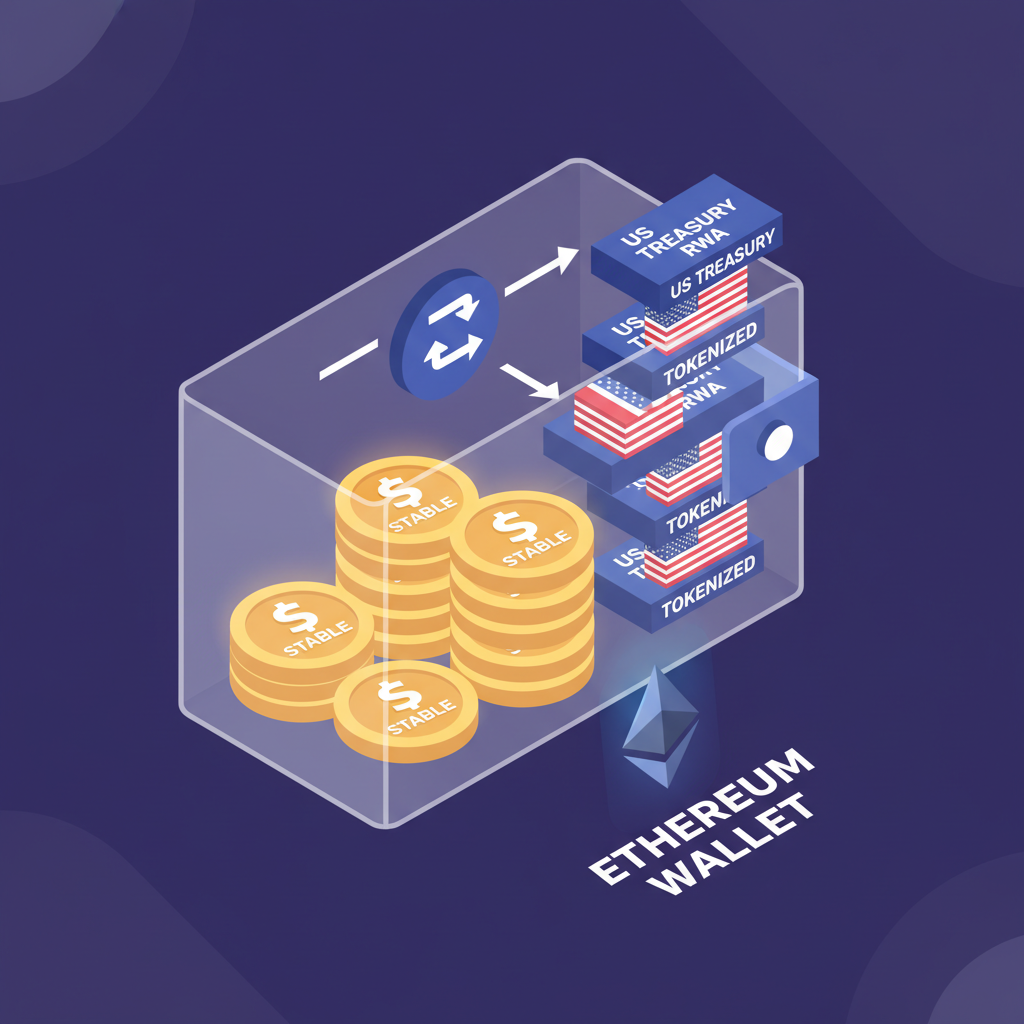
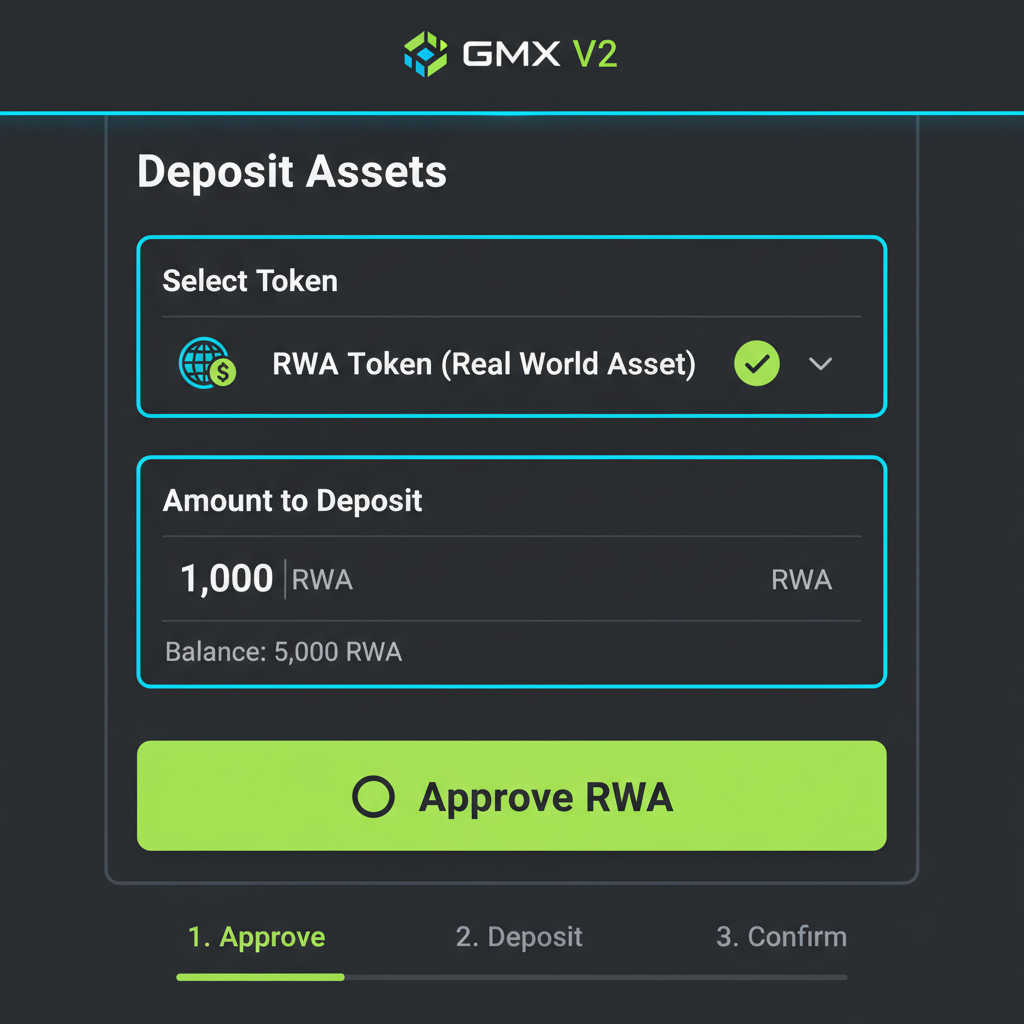
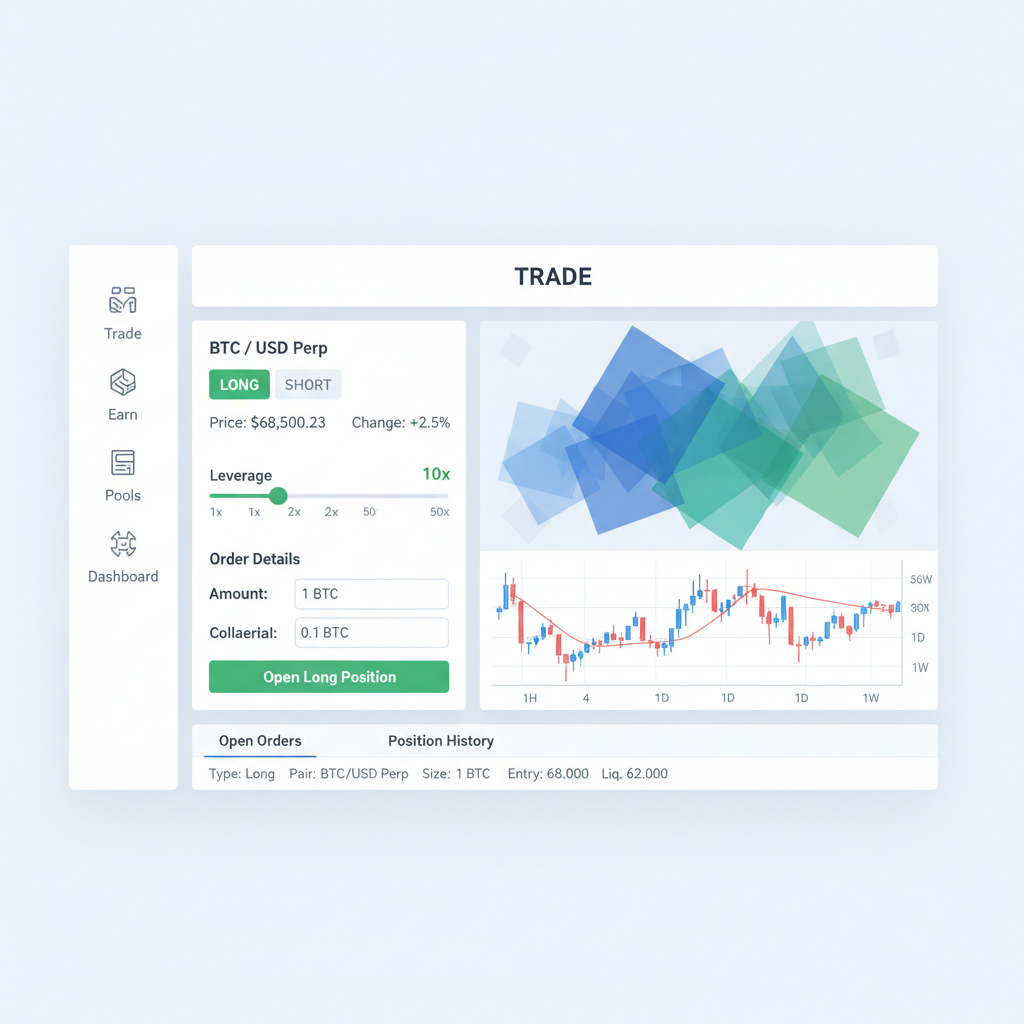
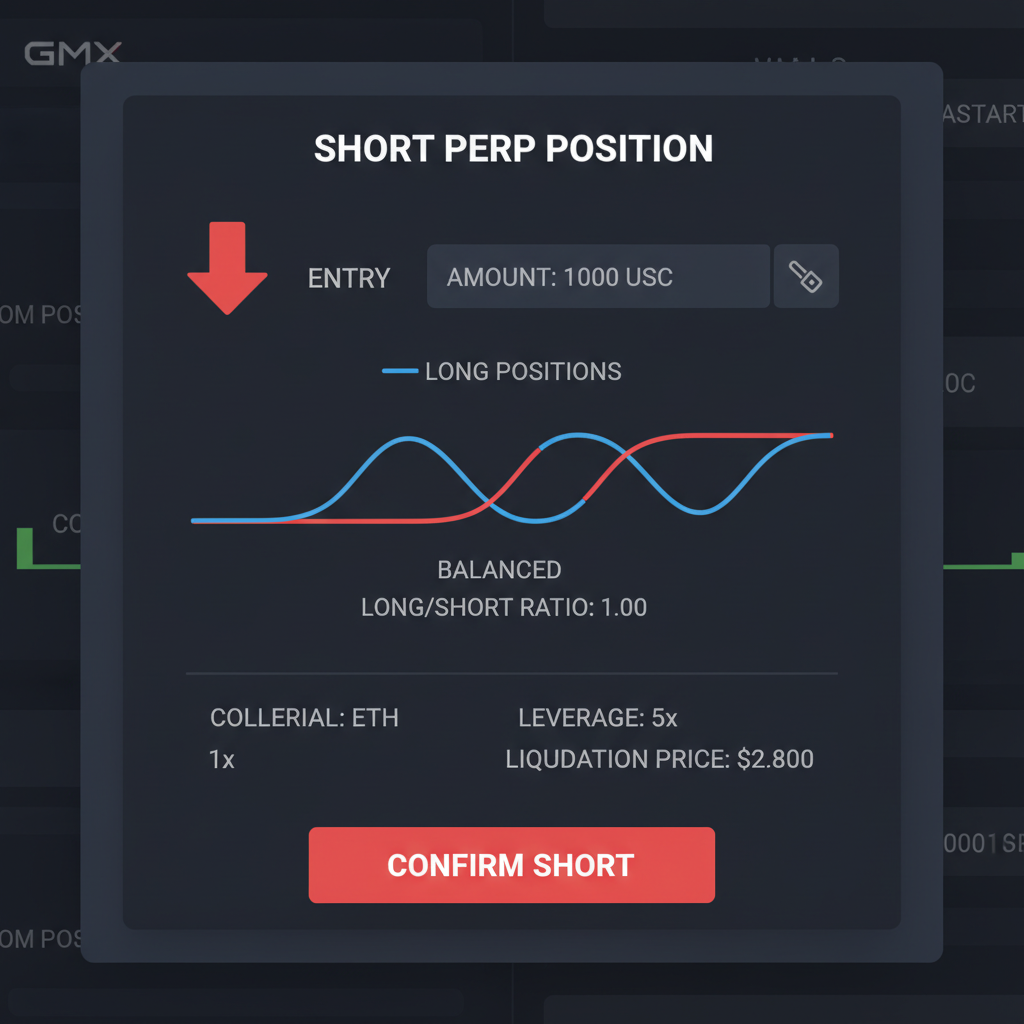
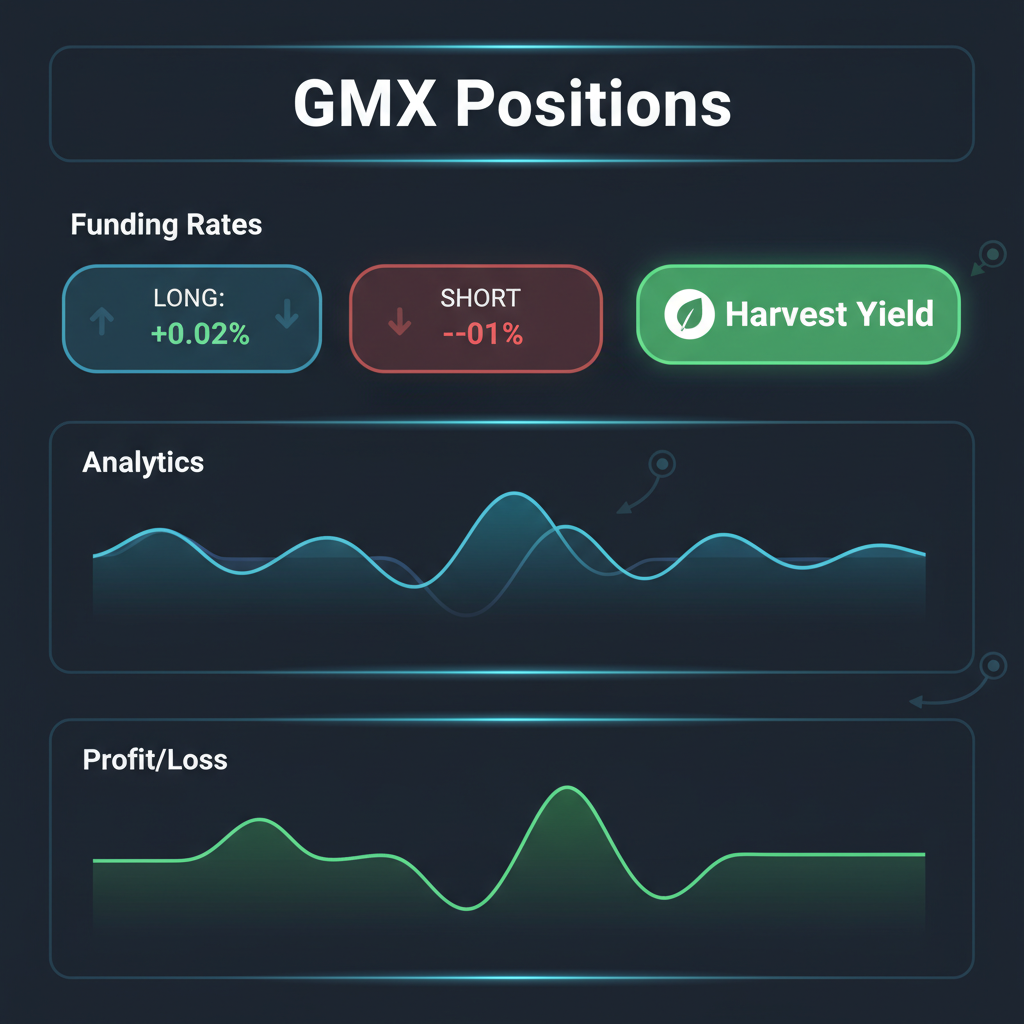
Begin by bridging or acquiring tokenized RWAs like U. S. Treasury funds directly on Arbitrum, where institutional inflows have boosted liquidity. Deposit into GMX as collateral, then layer a spot position in the base asset alongside an equal-sized perp in the opposite direction. For BTC, hold spot BTC long while shorting BTC-PERP; funding flows your way when longs dominate. Rebalance weekly or on rate flips, capitalizing on Arbitrum’s fee predictability to keep costs under 0.01% per adjustment.
This GMX Arbitrum hedged perps flow isn’t guesswork; community automation scripts on GitHub handle the heavy lifting, backtested for 30% and APR in bull-biased markets. With GMX at $6.07, protocol fees remain robust, funneled 70% to LPs via GLP pools shielded by GHV.
Advanced Vaults: 3x Neutral and Beyond
Steadefi’s 3x Neutral GMXv2 vault takes delta neutral yield Arbitrum to new heights, borrowing to triple fee exposure while hedging price risk. It borrows stables against collateral, deploys into leveraged GLP positions, and nets amplified returns from swaps and funding, often 50-100% APR in simulations, minus borrow costs. GHV integration ensures pools stay neutral, with vaults absorbing any residual delta.
RWA collateral GMX elevates this further: post yielding Treasuries to vaults, earning dual yields from asset coupons and perp premiums. Institutional adoption, evident in Arbitrum’s RWA TVL growth, signals sustainability; money market funds now underpin billions in perps collateral, blending TradFi safety with DeFi alpha.
GMX’s GHV shifts PnL volatility from LPs to dedicated vaults, enabling true risk-neutral yields while aggressive participants chase directional upside.
Yet sophistication breeds nuance. Current long-skewed funding in majors like ETH favors shorts, but BTC dominance shifts demand vigilance. Pair with RWA baselines yielding 4-5%, and net returns outpace most CeFi alternatives.
Performance data reinforces the edge: GMX LPs have compounded fees sans IL for quarters, with hedgers reporting consistent 20-40% annualized. At $6.07, GMX’s token captures governance and fee accrual, positioning holders for ecosystem expansion.
Navigating Risks in Arbitrum Funding Rate Farming
No strategy thrives unchecked. Smart contract exploits loom, though GMX’s battle-tested audits and 2024 incident-free record mitigate this. Liquidation cascades in extreme volatility test collateral ratios; maintain 5x and buffers with RWA stability. Funding rate regimes flip, prolonged shorts-paying eras erode shorts’ edge, demanding dynamic hedging.
- Counterparty Risk: Minimal on decentralized GMX, but oracle deviations warrant attention.
- Opportunity Cost: RWAs yield modestly; deploy excess into multi-vault rotations.
- Regulatory Horizon: Tokenized RWAs draw scrutiny, yet Arbitrum’s compliance-friendly frame appeals to funds.
Mitigate via diversification: allocate 20% to GHV-neutral, 30% to 3x vaults, rest in direct arb. Tools like on-chain dashboards track real-time funding, empowering precise entries.
GMX’s evolution, from raw perps to RWA-hedged ecosystems, heralds DeFi’s maturation. Traders wielding these tools sidestep directional noise, harvesting structural yields in a $6.07-fueled protocol. As Arbitrum cements dominance, early movers in delta neutral yield Arbitrum redefine passive income, patience yielding outsized performance amid inevitable cycles.
About the Author