
Arbitrum one choices that change the plan
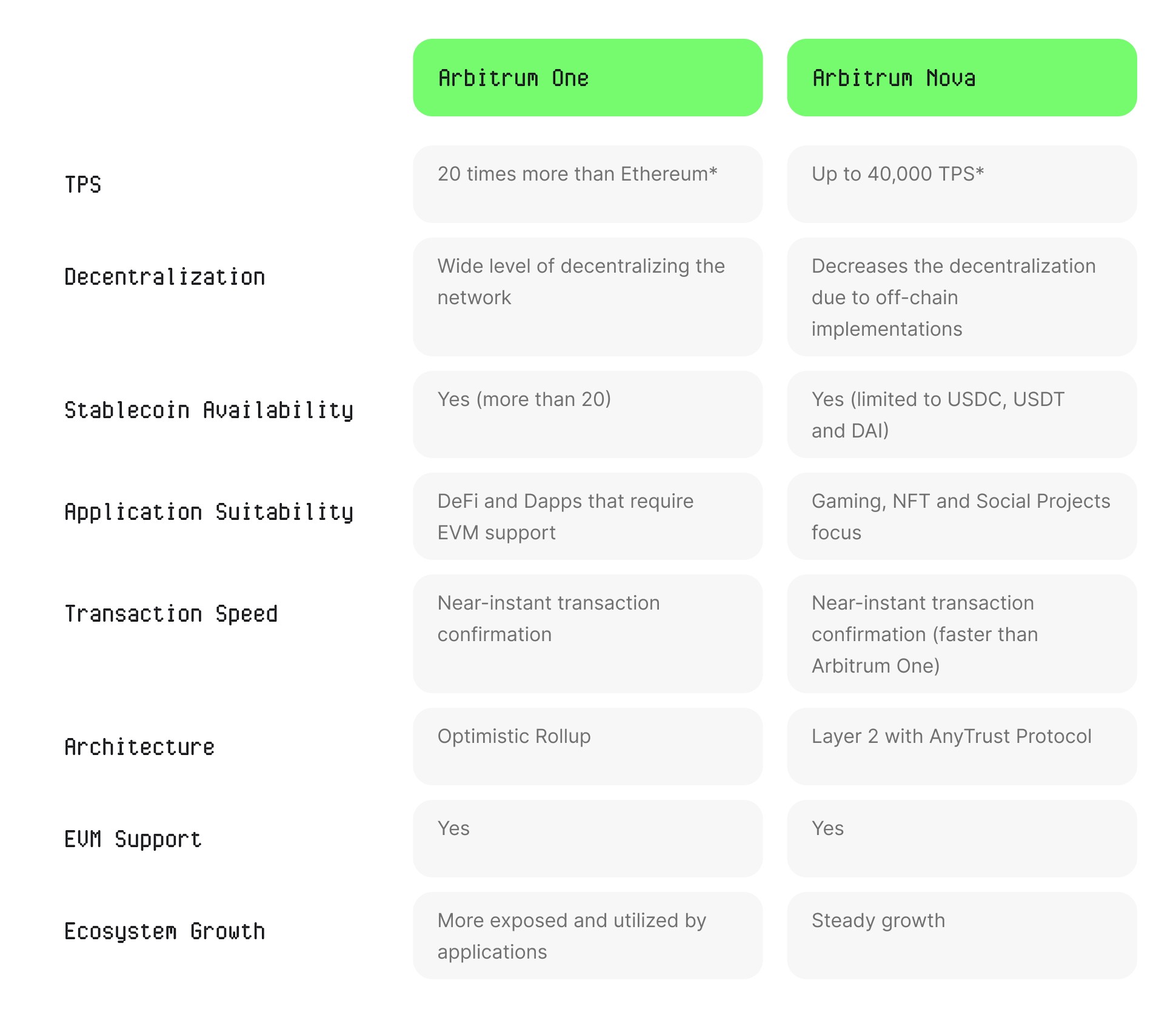
Arbitrum One is a Layer 2 rollup built to scale Ethereum. It inherits Ethereum’s security while processing transactions off-chain. The tradeoff is complexity. You must bridge assets from Ethereum, wait for settlement windows, and accept that you are dependent on Ethereum’s finality. This architecture makes it ideal for high-value DeFi but less suitable for instant, low-stakes interactions.
Arbitrum Nova is a separate chain optimized for high throughput and low latency. It uses a different data availability layer and fraud proof system. The tradeoff is security. Nova prioritizes speed and cheap fees over the maximal security of the Ethereum mainnet. It is designed for gaming and social apps where users expect instant feedback, not for locking up large capital.
DeFi and Security
Arbitrum One is the home of Ethereum-native DeFi. It supports major protocols like Aave, GMX, and Uniswap. If you are managing significant funds, Arbitrum One is the safer choice. The security model is robust because it relies on Ethereum’s consensus layer. Nova’s security model is different; it is faster but less battle-tested for large-scale value transfer.
Gaming and User Experience
Nova is built for gaming. Transactions are near-instant, and fees are fractions of a cent. This makes it perfect for in-game purchases, NFT trading, and social applications. Arbitrum One is too slow and expensive for these use cases. If your application requires high frequency and low cost, Nova is the better fit.
Ecosystem and Liquidity
Arbitrum One has the largest DeFi ecosystem. It holds billions in total value locked (TVL). Nova has a smaller, growing ecosystem focused on gaming and social tokens. If you need deep liquidity for trading or lending, Arbitrum One is the only option. Nova is better for niche applications that prioritize speed.
| Feature | Arbitrum One | Arbitrum Nova | Best For |
|---|---|---|---|
| Security Model | Ethereum L2 (High) | Optimistic Rollup (Medium) | Arbitrum One |
| Transaction Speed | ~1-2 seconds | ~200ms | Arbitrum Nova |
| Cost | Low ($0.10-$0.50) | Very Low (<$0.01) | Arbitrum Nova |
| DeFi Liquidity | High (Billions TVL) | Low (Niche) | Arbitrum One |
| Gaming | Limited | Optimized | Arbitrum Nova |
| Data Availability | Ethereum L1 | Blob/DA Layer | Arbitrum One |
Where Arbitrum One and Nova Fit Best
Arbitrum One and Arbitrum Nova serve different parts of the ecosystem. One is built for high-value finance; the other is built for high-volume gaming. Choosing the right chain depends on whether you prioritize security and asset depth or speed and low cost.
Arbitrum One: The Finance Hub
Arbitrum One is the main layer-2 network for Ethereum. It connects directly to Ethereum’s security model, making it the go-to chain for serious DeFi. If you are moving significant capital, trading complex derivatives, or interacting with established protocols like GMX or Aave, Arbitrum One is the correct choice. The network hosts the deepest liquidity and the most audited smart contracts in the ecosystem. The tradeoff is higher gas fees and slower finality compared to Nova, but you get the assurance of Ethereum-level settlement.
Arbitrum Nova: The Gaming Chain
Arbitrum Nova was designed specifically for social and gaming applications. It uses a different fraud-proof system called AnyTrust, which relies on a set of data availability committees rather than posting all data on Ethereum. This reduces costs dramatically, allowing for near-instant transactions and fractions of a cent in fees. This makes Nova ideal for on-chain games, social tokens, and high-frequency micro-transactions. While it is cheaper and faster, it has a smaller ecosystem of major DeFi protocols compared to Arbitrum One.
Details worth checking
Arbitrum One and Arbitrum Nova share a lineage but diverge sharply in architecture, which creates specific risks and exclusions for users. Before bridging assets or deploying contracts, verify these operational details to avoid unexpected costs or incompatible environments.
Not all assets support both chains. While ETH and major ERC-20s bridge easily to Arbitrum One, some tokens are exclusive to Nova for gaming microtransactions. Check the official Arbitrum bridge documentation to confirm if your specific token pair is supported on both networks before attempting a transfer.
Arbitrum One uses Ethereum L1 data availability, meaning gas prices can spike during network congestion. Nova uses a different data availability layer optimized for low-cost, high-frequency transactions. If you are a high-frequency trader or gamer, Nova’s fee structure is generally more predictable, but you must verify current gas estimates on Arbiscan before executing large trades.
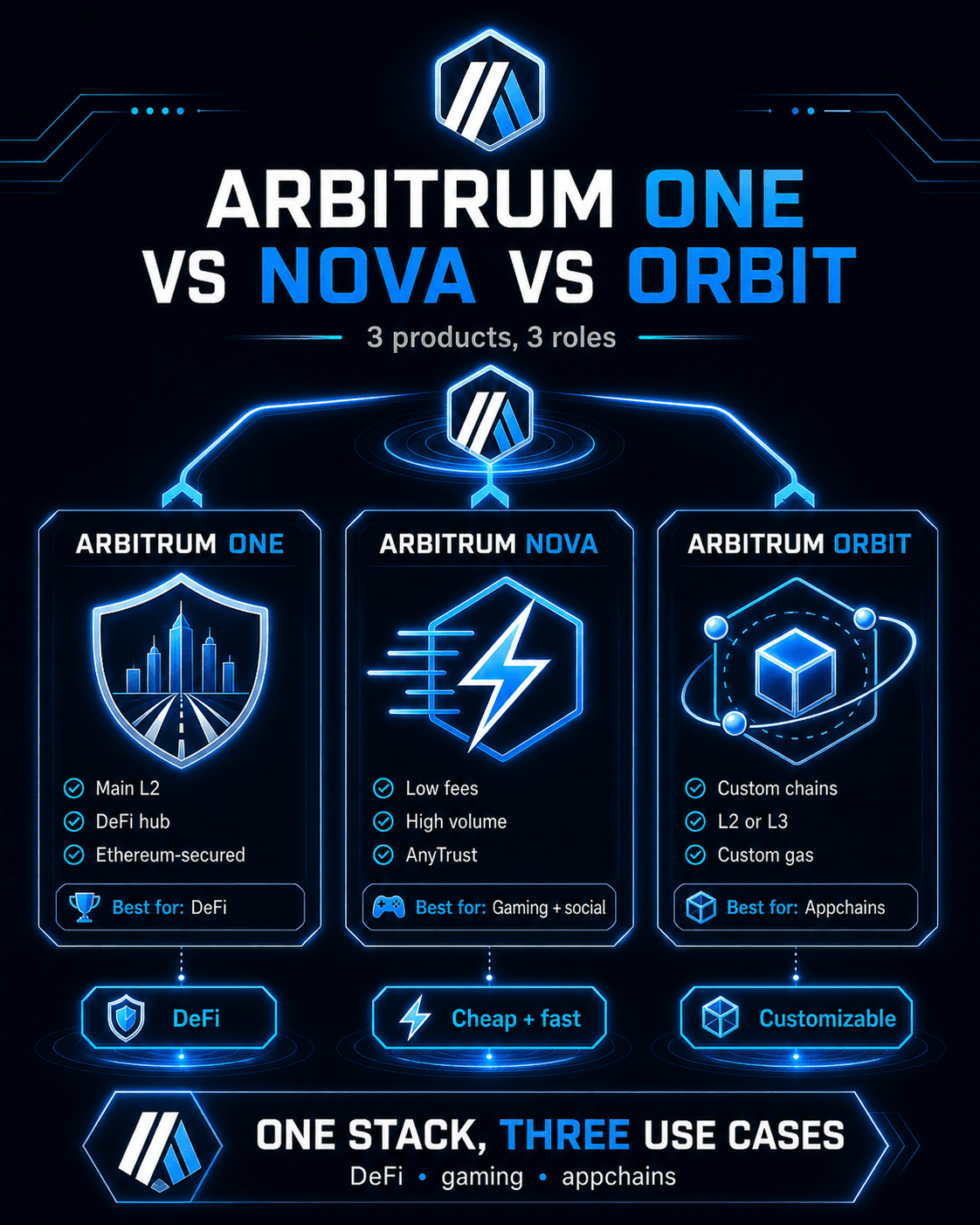
Most DeFi protocols deploy on Arbitrum One first. Gaming and social dApps often prioritize Nova for its lower latency. If a project lists "Arbitrum" generally, verify whether it targets One or Nova. Using the wrong chain can result in lost liquidity or inability to access your positions, as the chains are not fully interoperable at the smart contract level.
No comments yet. Be the first to share your thoughts!