
Arbitrum One vs Nova at a glance
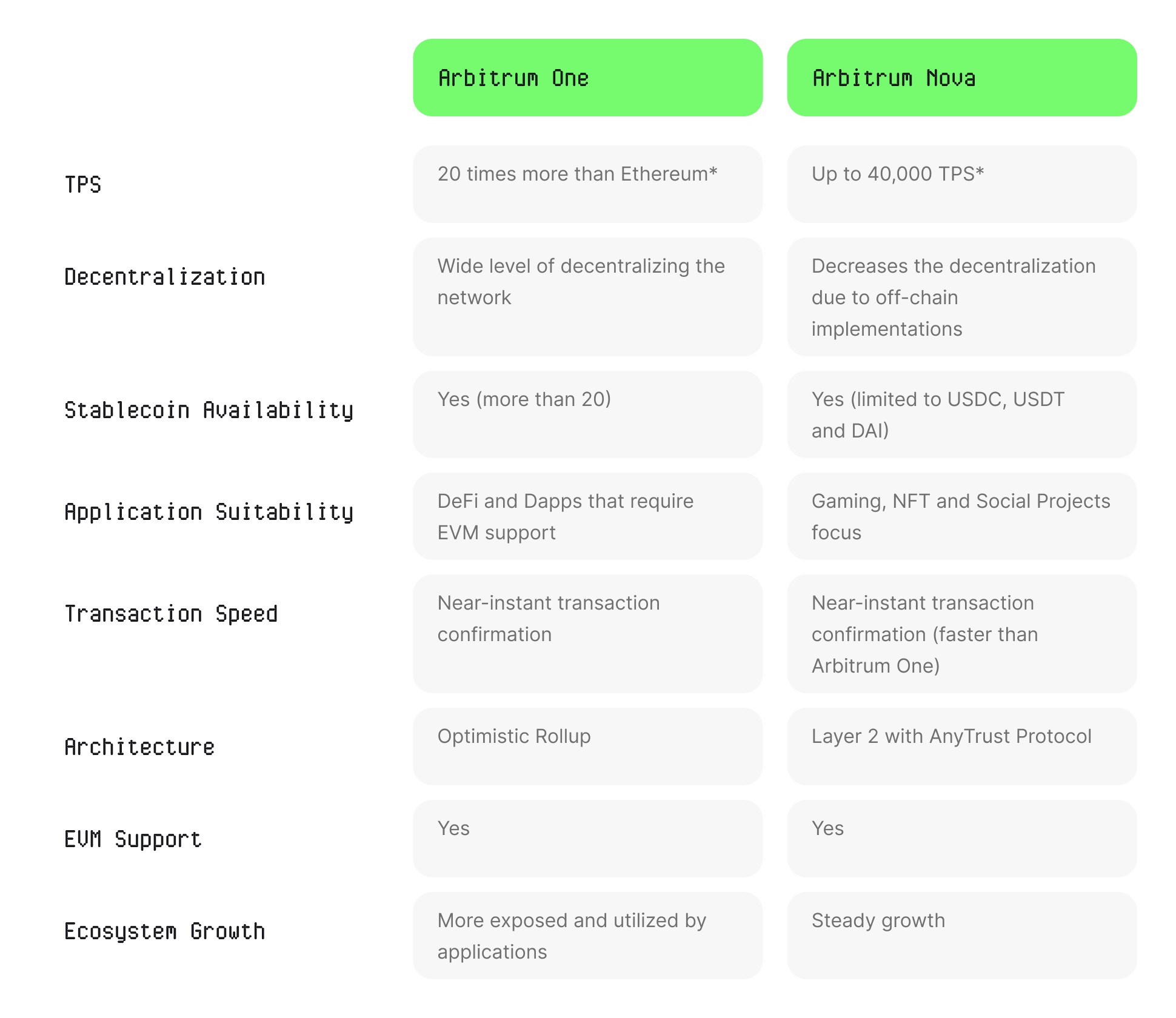
Arbitrum One and Arbitrum Nova serve distinct roles within the same ecosystem, optimized for different layers of user activity. Arbitrum One operates as the primary settlement layer, designed for high-value transactions and complex decentralized applications. It prioritizes security and finality, making it the go-to chain for serious DeFi protocols and institutional-grade tokenization.
Arbitrum Nova, by contrast, is built for speed and cost-efficiency. It targets high-frequency, low-value interactions such as social gaming and micro-transactions. By leveraging a different sequencing model, Nova drastically reduces fees, allowing users to execute hundreds of transactions for the cost of a single one on the main chain.
The choice between the two comes down to your specific use case. If you are moving significant capital or interacting with established financial protocols, Arbitrum One provides the robust infrastructure you need. For casual users or developers building engaging, high-volume applications, Nova offers the frictionless experience required to retain user attention.
| Feature | Arbitrum One | Nova | Best For |
|---|---|---|---|
| Primary Focus | Security & Value | Speed & Cost | DeFi vs Gaming |
| Target Audience | Institutions & High-Value Users | Casual Users & Developers | Serious Finance vs Mass Adoption |
| Transaction Costs | Standard L2 Fees | Ultra-Low Fees | Cost Sensitivity |
| Typical Use Cases | DeFi, Tokenization, Stablecoins | Social Apps, Gaming, Micro-transactions | Application Type |
Arbitrum One: DeFi depth and stability
Arbitrum One has solidified its position as the primary destination for serious DeFi activity in 2026. While other chains chase novelty, Arbitrum One focuses on liquidity and stability, attracting the bulk of institutional and retail capital. The network’s monthly stablecoin volume has reached approximately $23.7 billion, a figure that underscores its role as the backbone of on-chain commerce. This volume is not just a metric of activity; it is evidence of a mature ecosystem where large transactions occur without the friction seen on newer or more congested networks.
The total value locked (TVL) on Arbitrum One consistently exceeds $200 million, but this number only tells part of the story. The real strength lies in the depth of that liquidity. Major lending protocols, decentralized exchanges, and yield aggregators operate here with deep order books and minimal slippage. For traders and institutions, this means execution reliability. When markets move, Arbitrum One absorbs the pressure, providing the stability that high-stakes financial operations require.
Beyond raw volume, the introduction of dynamic pricing on Arbitrum One has addressed one of the most persistent pain points in blockchain scaling. By allowing businesses to predict transaction costs at scale, the network has become more attractive for enterprise applications. Combined with emerging compliance tooling and ZK-proof settlement layers, Arbitrum One is no longer just a fast L2; it is a programmable economy built for longevity.
Nova for gaming and social apps
Use this section to make the Arbitrum One vs Nova decision easier to compare in real life, not just on paper. Start with the reader's actual constraint, then separate must-have requirements from details that are merely nice to have. A practical choice should survive normal use, maintenance, timing, and budget. If a recommendation only works in an ideal situation, call that out plainly and give the reader a fallback path.
The simplest way to use this section is to write down the must-have criteria first, then compare each option against those criteria before weighing nice-to-have features.
ARB token unlock and market impact
Use this section to make the Arbitrum One vs Nova decision easier to compare in real life, not just on paper. Start with the reader's actual constraint, then separate must-have requirements from details that are merely nice to have. A practical choice should survive normal use, maintenance, timing, and budget. If a recommendation only works in an ideal situation, call that out plainly and give the reader a fallback path.
The simplest way to use this section is to write down the must-have criteria first, then compare each option against those criteria before weighing nice-to-have features.
Choosing the right chain for your strategy
Use this section to make the Arbitrum One vs Nova decision easier to compare in real life, not just on paper. Start with the reader's actual constraint, then separate must-have requirements from details that are merely nice to have. A practical choice should survive normal use, maintenance, timing, and budget. If a recommendation only works in an ideal situation, call that out plainly and give the reader a fallback path.
-
Verify the basicsConfirm the core specs, condition, and fit before comparing extras.
-
Price the downsideLook for the repair, maintenance, or replacement cost that would change the decision.
-
Compare alternativesCheck at least two comparable options before treating one listing as the benchmark.
No comments yet. Be the first to share your thoughts!