Arbitrum stylus choices that change the plan
Use this section to make the Arbitrum One vs. Stylus decision easier to compare in real life, not just on paper. Start with the reader's actual constraint, then separate must-have requirements from details that are merely nice to have. A practical choice should survive normal use, maintenance, timing, and budget. If a recommendation only works in an ideal situation, call that out plainly and give the reader a fallback path.
| Factor | What to check | Why it matters |
|---|---|---|
| Fit | Match the option to the primary use case. | A good deal still fails if it does not fit the job. |
| Condition | Verify age, wear, and service history. | Hidden condition issues erase upfront savings. |
| Cost | Compare purchase price with likely upkeep. | The cheapest option is not always the lowest-cost option. |
Where each option wins
Arbitrum One remains the standard for Ethereum-compatible applications, while Stylus opens the door for high-performance logic written in Rust, C, and C++. Choosing between them depends on your team's existing stack and the computational demands of your dApp.
Arbitrum One: The EVM Standard
Arbitrum One is the native execution environment, designed for full compatibility with Ethereum Virtual Machine (EVM) tooling. If your team uses Solidity, Vyper, or Hardhat, Arbitrum One is the direct path to deployment. It offers a mature ecosystem with deep liquidity, established libraries, and a vast developer community. This option is ideal for DeFi protocols, NFT marketplaces, and applications that prioritize seamless integration with existing Ethereum infrastructure over raw computational throughput. The tradeoff is that complex computations remain expensive due to EVM gas constraints.
Stylus: High-Performance Non-EVM Logic
Stylus allows developers to write smart contracts in languages like Rust, C, and C++, which compile to WebAssembly (WASM). This approach significantly lowers gas costs for compute-heavy tasks, such as zero-knowledge proofs, complex gaming logic, or high-frequency trading mechanisms. Stylus is best suited for projects that require sub-second finality for heavy calculations or teams already proficient in systems-level programming. It expands the talent pool beyond Solidity developers, though it requires adopting new toolchains like the Stylus SDK and understanding WASM-specific deployment procedures.
Decision Matrix
| Feature | Arbitrum One (EVM) | Stylus (WASM) |
|---|---|---|
| Primary Languages | Solidity, Vyper | Rust, C, C++ |
| Gas Efficiency | Standard EVM rates | Up to 100x cheaper for compute |
| Ecosystem | Full Ethereum compatibility | Newer, growing ecosystem |
| Best For | DeFi, NFTs, general dApps | ZK-rollups, complex games, AI |
Details worth checking
Stylus expands what you can build on Arbitrum One, but the new capabilities come with specific technical constraints and ecosystem risks. Before deploying Rust or C++ contracts, verify these critical details.
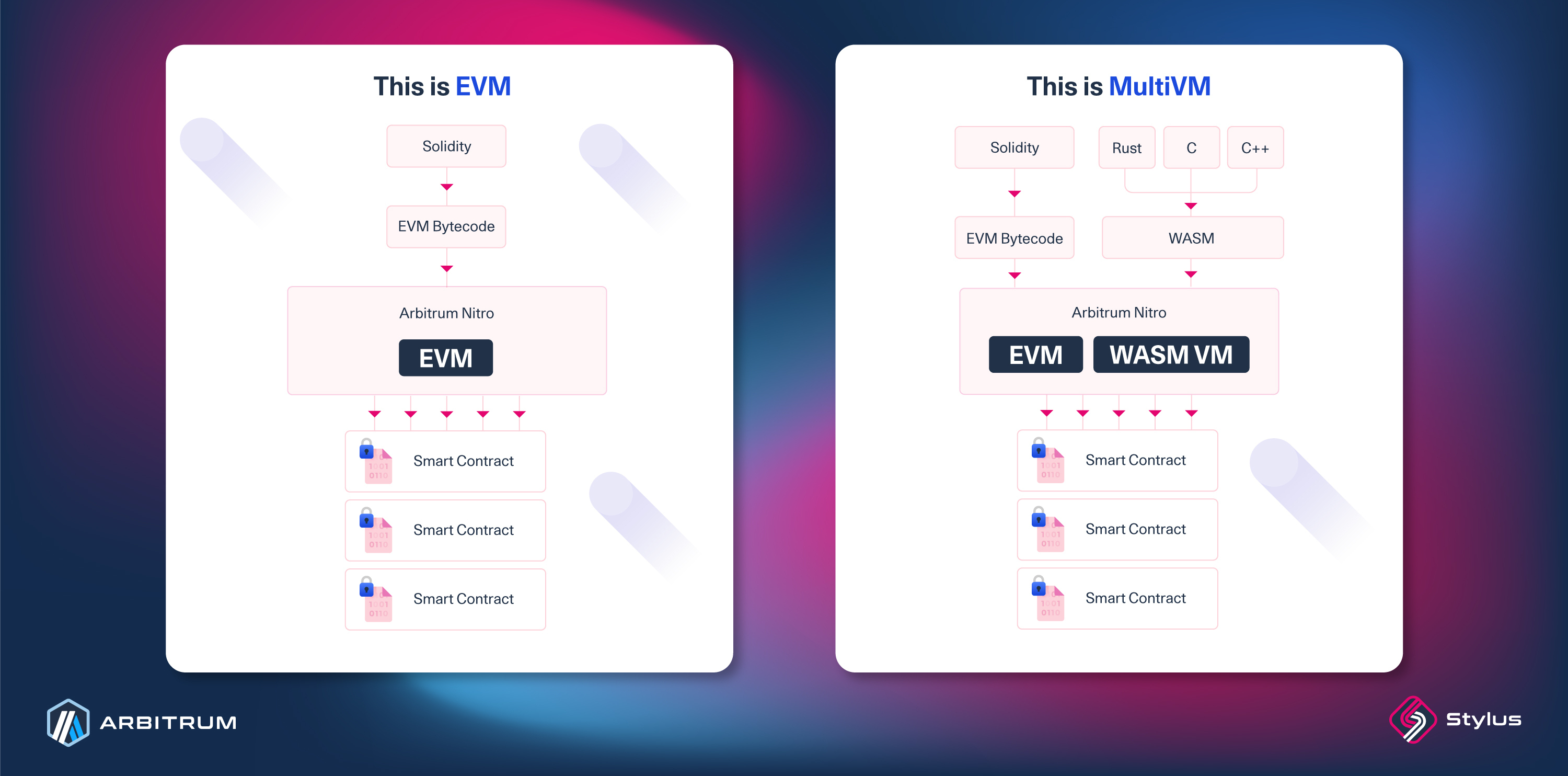
Stylus supports Rust, C, and C++ via WASM. However, not all standard libraries are available. Check the official documentation for the specific WASM target and library compatibility before writing complex logic. Unsupported features will cause deployment failures.
Arbitrum uses optimistic rollups, which introduce sequencer risk and potential withdrawal delays during network congestion. If your app relies on fast finality or cross-chain bridges, test how delays impact user experience during high traffic periods.
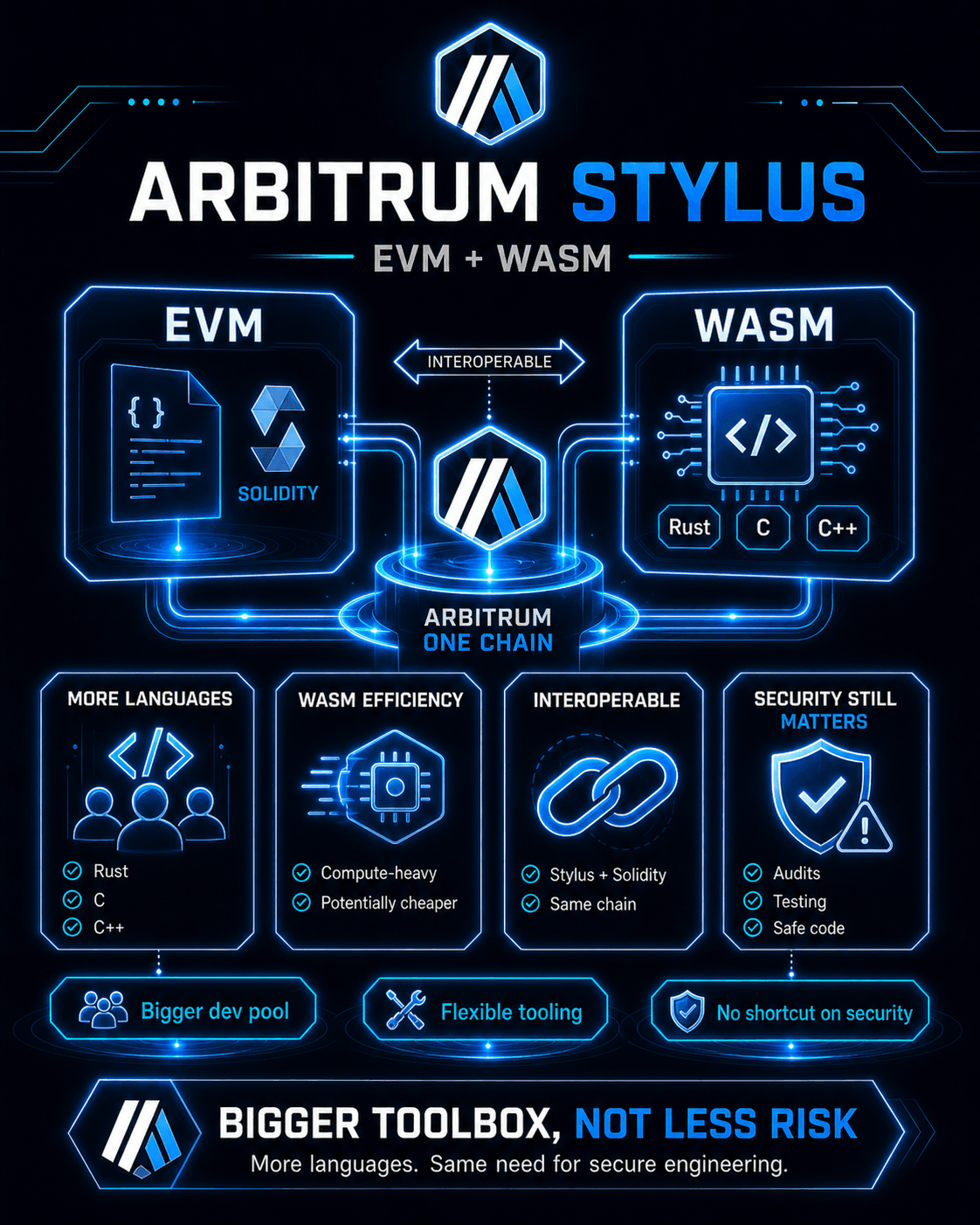
Like Ethereum, Arbitrum is permissionless. Any code can be deployed. Ensure your Rust or C++ code is rigorously audited. The performance gains of Stylus do not mitigate the risk of exploits; in fact, lower-level languages may introduce new vulnerability vectors if not carefully managed.
The ARB token and governance proposals can influence network upgrades and fee structures. Monitor token unlock schedules and governance votes, as these factors can affect network stability and the long-term viability of your application on the chain.
The primary keyword cluster focuses on Arbitrum One vs. Stylus. While Stylus offers significant advantages for developers using Rust and C++, the tradeoffs in security complexity and ecosystem maturity are real. Always prioritize security audits and verify technical constraints before committing to the Stylus architecture.
Arbitrum stylus: what to check next
Stylus is a new virtual machine that lets you write smart contracts in Rust, C, and C++ instead of only Solidity. It compiles to WebAssembly, allowing developers to use existing languages while keeping full compatibility with Ethereum infrastructure.
Arbitrum uses optimistic rollups to improve Ethereum’s speed and cost. It inherits Ethereum’s security model but offers higher throughput and significantly lower fees. This makes it a practical layer for applications that need scale without sacrificing decentralization.
Using Arbitrum involves standard crypto risks, including smart contract exploits, bridge vulnerabilities, sequencer delays, and market volatility. Stylus adds a layer of complexity: while WASM is faster, it is a newer runtime with fewer audited standards than the EVM.
Arbitrum is permissionless, meaning anyone can deploy code. You should treat it like Ethereum: only interact with applications you trust. For Stylus specifically, verify that the Rust or C++ code has undergone professional auditing, as the tooling is still maturing.
No comments yet. Be the first to share your thoughts!