
Arbitrum One vs Orbit chains explained
Arbitrum One functions as the foundational settlement layer for the ecosystem. It operates as a single, shared Layer 2 network where all users and applications compete for block space and security. This design ensures that every transaction on Arbitrum One is secured by the same robust validator set and settles directly onto Ethereum. It is the bedrock of the network, providing a standardized environment for high-throughput execution.
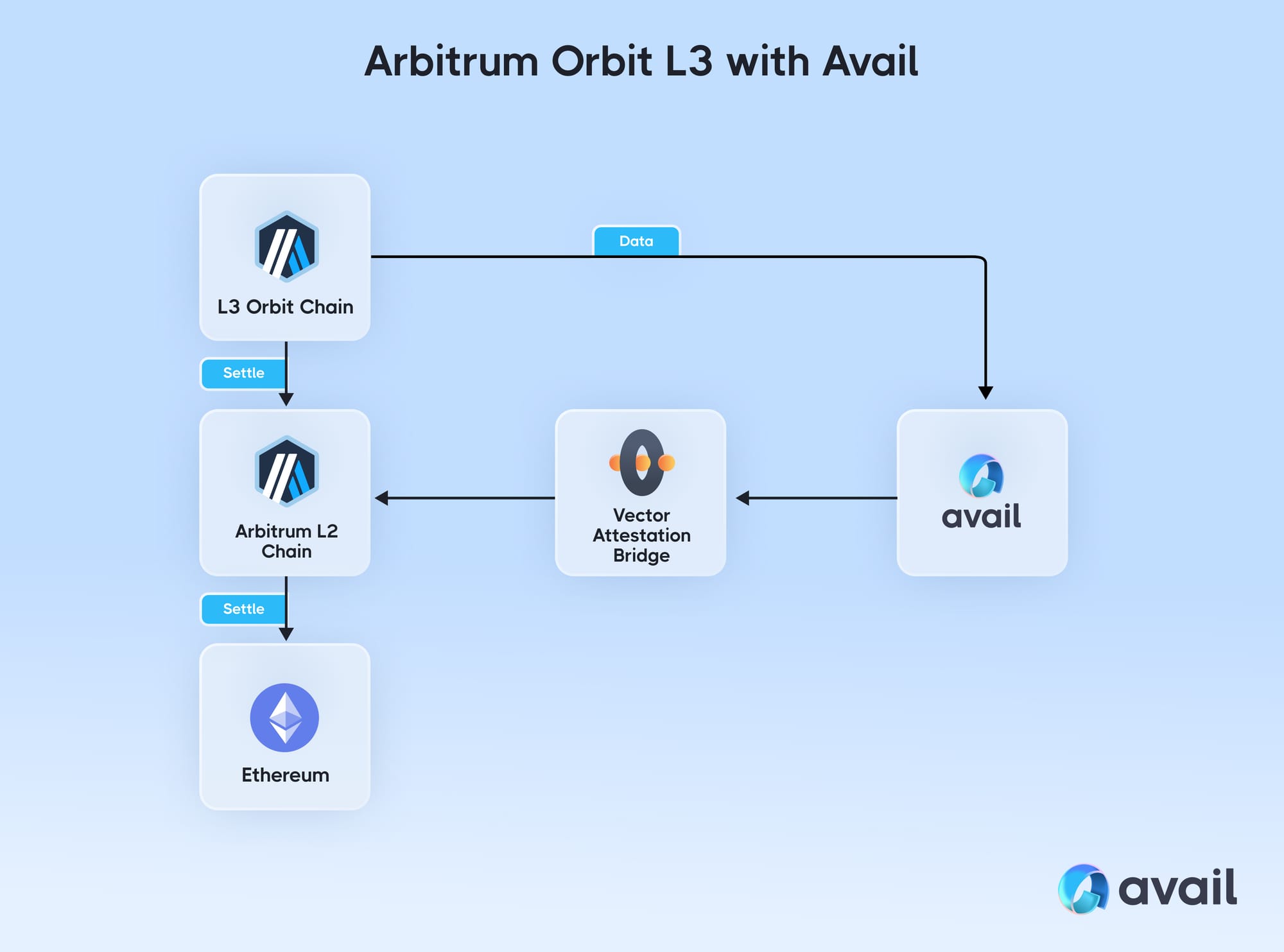
Orbit chains, by contrast, are customizable Layer 3 networks built on top of Arbitrum One. Instead of competing for space on the main layer, Orbit chains settle their state proofs back to Arbitrum One. This architecture allows developers to launch independent chains using the Arbitrum Nitro codebase, tailoring execution parameters to specific needs without compromising the security of the base layer. As noted in the official documentation, this setup enables the creation of "completely customizable chains" that fit unique operational requirements.
The distinction is architectural: Arbitrum One is the shared highway, while Orbit chains are private exits designed for specific traffic. This separation of concerns allows the ecosystem to scale horizontally. Developers can choose between the broad compatibility of Arbitrum One or the specialized flexibility of an Orbit chain, depending on whether they prioritize shared liquidity or customized execution.
| Layer | Primary Role | Customization Level |
|---|---|---|
| Arbitrum One | Settlement & Shared Execution | Standardized parameters |
| Orbit Chains | Custom Execution | Full Nitro stack control |
Nitro technology and shared security
Arbitrum Nitro is the unified codebase that powers both Arbitrum One and all Orbit chains. By replacing the traditional EVM interpreter with a native C++ implementation, Nitro achieves significant performance gains while maintaining full compatibility with existing Ethereum smart contracts. This foundational upgrade ensures that custom chains built on Orbit inherit the same efficiency and compatibility as the mainnet.
The most critical advantage of this architecture is shared security. Orbit chains do not operate in isolation; they rely on Arbitrum One as their settlement layer. When an Orbit chain processes transactions, it does not need to run its own consensus mechanism or validator set. Instead, it submits compressed transaction data and state roots to Arbitrum One, which verifies them against Ethereum. This means that the security of a custom chain is directly tied to the security of Ethereum, secured by the same economic incentives that protect the largest decentralized networks.
This model eliminates the need for Orbit chains to bootstrap their own validator communities, a common hurdle for new blockchains. Developers can focus entirely on application-specific features—such as custom gas tokens, specific privacy rules, or tailored rollup configurations—without compromising on security. The result is a scalable infrastructure where customizability does not come at the cost of decentralization or safety. For more details on how Nitro enables this, see the official Arbitrum documentation.
Sequencing models and decentralization
Arbitrum One relies on a single, centralized sequencer to order transactions before they are settled on Ethereum. This model prioritizes speed and low latency, but it centralizes control over transaction inclusion and censorship. For many users, this trade-off is acceptable, but it introduces a single point of failure and potential regulatory risk.
Arbitrum Orbit changes this dynamic by allowing chain operators to choose their own sequencing architecture. Orbit chains can be configured as Arbitrum Rollups or AnyTrust chains, offering flexibility in how data is published and who controls the sequencer. This shift enables operators to implement decentralized sequencing or permissioned access controls, depending on their specific compliance and performance needs.
The table below compares the sequencing and customization capabilities of Arbitrum One against typical Orbit chain configurations. Orbit chains generally offer greater flexibility in gas token selection and settlement layers, allowing for more tailored economic models.
| Feature | Arbitrum One | Orbit Chain |
|---|---|---|
| Sequencer Model | Centralized | Configurable (Centralized/Decentralized) |
| Gas Token | ETH | Custom (ETH or ERC-20) |
| Data Availability | Ethereum L1 | Ethereum L1 or AnyTrust DA |
| Customization | None (Fixed Protocol) | High (Governance, Rules) |
| Decentralization | Low (Single Sequencer) | Variable (Operator Dependent) |
This flexibility comes with responsibility. Orbit chain operators must manage their own sequencer infrastructure or select a third-party provider, which can increase operational complexity. However, for projects requiring specific compliance standards or custom economic incentives, Orbit provides the necessary tools to build a more tailored L3 solution.
Custom gas tokens and governance
Arbitrum Orbit chains provide a level of customization that Arbitrum One does not offer, allowing developers to tailor the economic and access layers of their networks. While Arbitrum One functions as a general-purpose Layer 2 with a standardized token model, Orbit chains enable the creation of dedicated Layer 3 environments with specific governance and gas mechanisms.
Custom Gas Tokens
One of the most significant differentiators is the ability to define custom gas tokens. On Arbitrum One, users must hold ETH to pay for transaction fees, which ties the network's economic activity directly to Ethereum's liquidity and volatility. Orbit chains break this tether. Developers can configure their chains to accept alternative ERC-20 tokens for gas payments. This feature is critical for enterprise applications or specific ecosystems that require stablecoin-based fee structures or wish to integrate their own native tokens into the transaction economy without relying on ETH.
Permissioned Access Controls
Orbit chains also support permissioned access controls, a capability absent in the public, permissionless nature of Arbitrum One. By default, Arbitrum One is open to any user, but Orbit allows chain operators to restrict who can submit transactions or participate in the network. This is essential for regulated industries, private consortiums, or internal corporate tools where data privacy and compliance are mandatory. Developers can implement allowlists or role-based access to ensure that only authorized entities interact with the chain.
Settlement Layer Flexibility
Beyond gas and access, Orbit chains offer flexibility in settlement layers. While they settle on Arbitrum L2s, the architecture allows for more granular control over how state is posted and verified. This modular approach contrasts with Arbitrum One’s fixed settlement on Ethereum L1, providing developers with the tools to balance decentralization, cost, and speed according to their specific use case.
These customization options make Orbit chains a superior choice for projects requiring specific economic models or restricted access, whereas Arbitrum One remains the optimal choice for public, high-throughput applications that benefit from Ethereum’s security and broad liquidity.
Choosing between Arbitrum One and Orbit
The decision to build on Arbitrum One or launch a custom Orbit chain comes down to one question: do you need the network effect, or do you need total control? Arbitrum One is the established hub, designed for broad adoption and deep liquidity. Orbit is the modular framework, designed for specialized tokenomics and governance.
Arbitrum One: The Liquidity Hub
Arbitrum One is the default platform for launching chains because it offers immediate access to a mature ecosystem. When you build here, you inherit the security model and the user base of the largest Ethereum L2. This is the right choice if your priority is maximizing liquidity and minimizing the friction of user onboarding. You are essentially renting space in the most active part of the Arbitrum economy.
Orbit: The Custom Framework
Orbit allows developers to launch their own Layer 2 or Layer 3 chains using the Nitro stack. This is not a one-size-fits-all solution. It is designed for projects that require specialized tokenomics, custom gas models, or specific governance structures that don't fit Arbitrum One's general-purpose design. While Orbit chains benefit from Arbitrum's security, they operate with greater autonomy. As noted by Arbitrum, the Orbit ecosystem is expanding, offering a stronger foundation for specialized chains in 2026.
The Decision Framework
Use Arbitrum One if your project relies on cross-protocol interactions, high trading volume, or needs to tap into existing DeFi liquidity pools. The network effect is your primary asset.
Use Orbit if your project has unique economic requirements, such as a custom fee structure, specific validator sets, or a need for isolated governance. You are trading the immediate liquidity of Arbitrum One for the flexibility to design a chain that fits your exact needs.
No comments yet. Be the first to share your thoughts!