What Arbitrum Stylus actually is
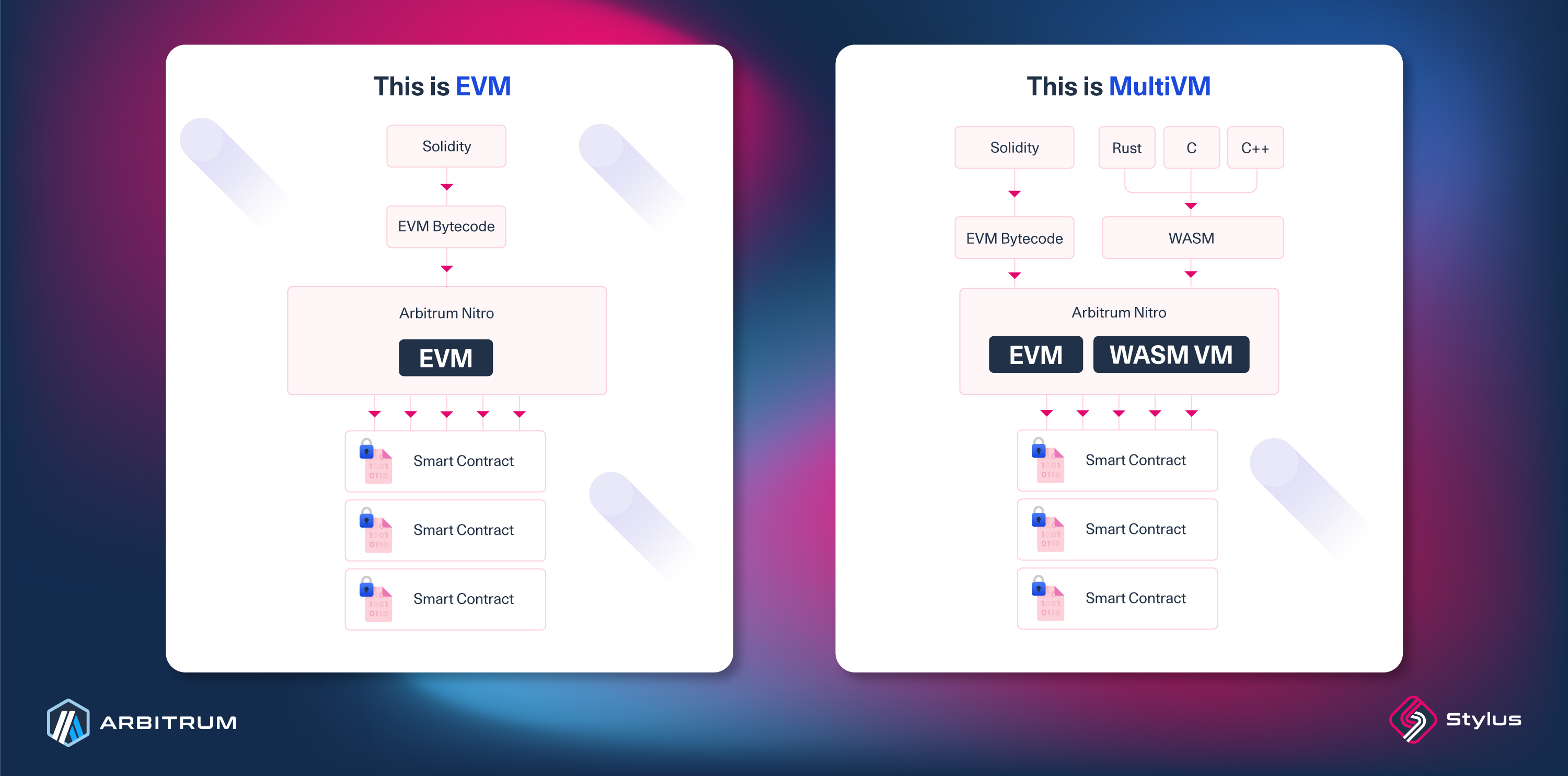
Arbitrum Stylus is a foundational upgrade to the Nitro stack, specifically powering ArbOS 32. It allows developers to write smart contracts in high-performance languages like Rust, C, and C++, running them alongside traditional Solidity contracts on Arbitrum One and Arbitrum Nova. This integration maintains full EVM compatibility, meaning existing Ethereum tooling and wallets continue to work without modification.
For Web2 developers, Stylus removes the barrier of learning Solidity to participate in Web3. You can build complex, compute-heavy applications using familiar languages while still benefiting from the security and liquidity of the Ethereum ecosystem. The system executes these non-EVM programs in a sandboxed environment that interacts seamlessly with the EVM, bridging the gap between traditional software engineering and blockchain development.
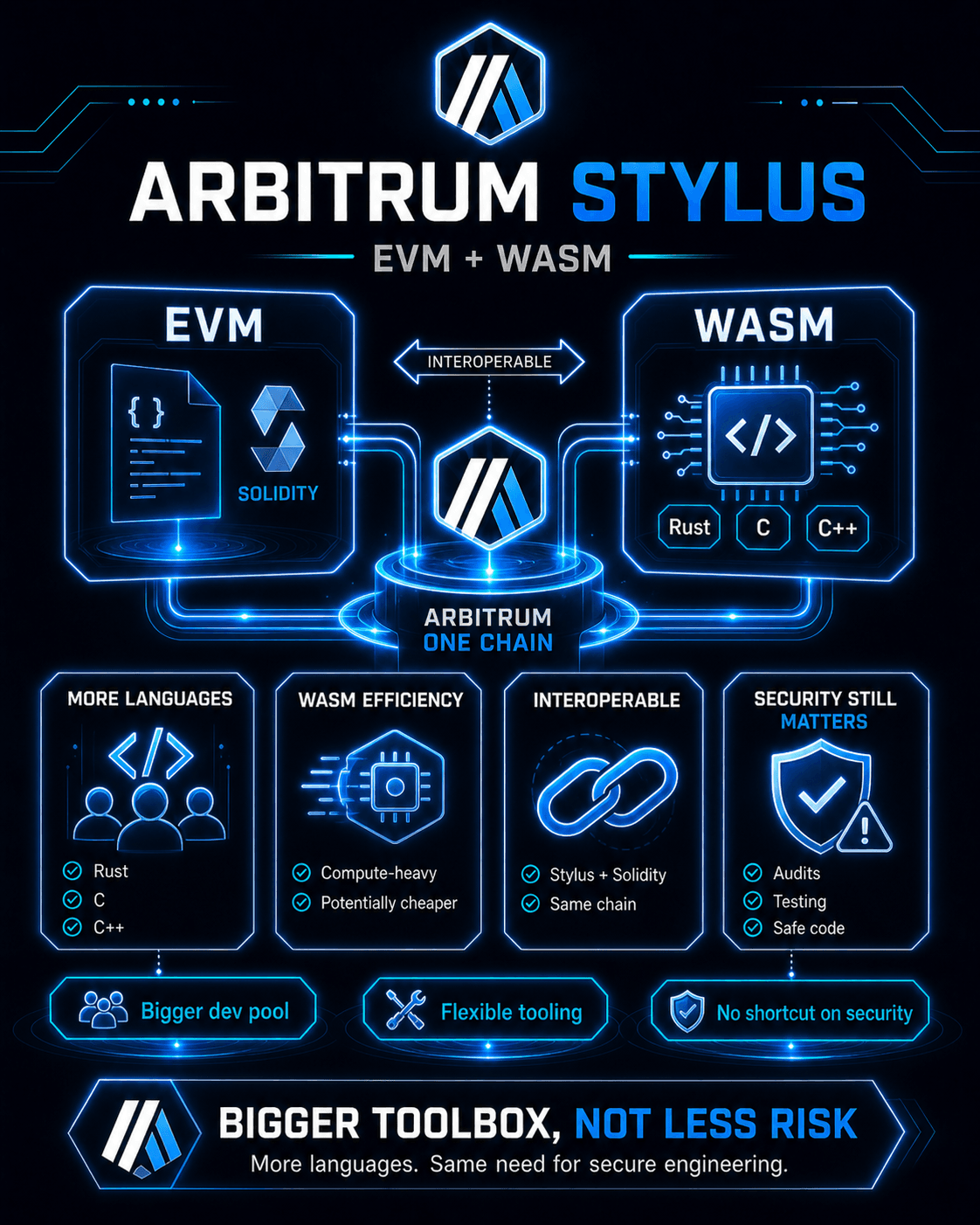
The upgrade does not replace the EVM; it extends it. By adding WebAssembly (WASM) support, Arbitrum enables faster execution for logic-heavy tasks that would be prohibitively expensive in pure Solidity. This dual-engine approach ensures that developers can choose the right tool for the job, leveraging Rust for performance-critical components while keeping standard token logic in Solidity.
Learn more about the gentle introduction to Stylus
Rust, Move, and Solidity on Arbitrum
Arbitrum Stylus allows developers to write smart contracts in Rust, C, and C++ alongside Solidity. This upgrade to the Nitro stack means you can choose the language that best fits your project's needs without sacrificing Ethereum compatibility. For developers coming from traditional Web2 backgrounds, Rust and Move offer performance and safety features that Solidity does not provide natively.
The choice between these languages often comes down to the trade-off between ecosystem maturity and raw performance. Solidity remains the standard for Ethereum interoperability, while Rust offers a balance of speed and safety. Move, recently supported via the Rather Labs compiler, brings formal verification capabilities ideal for high-security applications. Understanding these differences helps you pick the right tool for your specific use case.
| Language | Type | Gas Efficiency | Memory Usage | Primary Use Case |
|---|---|---|---|---|
| Solidity | EVM-native | Standard | High (EVM stack) | DeFi, general dApps |
| Rust | WASM | Low (optimized) | Low (stack-based) | High-frequency trading, gaming |
| Move | WASM | Low (optimized) | Low (stack-based) | Token standards, secure assets |
Rust is the most mature non-Solidity option on Stylus. It provides memory safety without a garbage collector, which translates to lower gas costs compared to EVM execution. The ecosystem is large, with many libraries already adapted for Arbitrum. If you are building a complex financial protocol or a game, Rust gives you the control and speed needed to handle high transaction volumes efficiently.
Move is a newer addition to the Arbitrum ecosystem, primarily supported through the Move-to-Stylus compiler. It was designed for blockchain with a focus on resource safety, ensuring that digital assets cannot be duplicated or lost accidentally. This makes it particularly attractive for projects dealing with sensitive assets or complex tokenomics where formal verification is a priority.
Solidity remains the default choice for most Ethereum projects. It has the largest developer base and the most extensive tooling. While it is less efficient in gas and memory than WASM-based languages, its compatibility with existing Ethereum infrastructure is unmatched. If your primary goal is easy migration from Ethereum mainnet or broad compatibility with existing wallets and explorers, Solidity is the safest bet.
Why Web2 developers are migrating
Arbitrum Stylus is changing the developer landscape by allowing teams to deploy smart contracts using Rust, C, and C++. For Web2 engineers, this removes the steep learning curve associated with Solidity and the EVM's unique memory model. Instead of rewriting logic in a specialized blockchain language, developers can port existing applications directly to the blockchain.
The technical advantages are immediate. Stylus contracts execute with native speed and offer significantly lower gas costs for compute-heavy tasks. Because Rust and C++ provide better memory management and type safety, developers can build complex applications—such as on-chain AI models or high-frequency trading bots—that would be prohibitively expensive or inefficient on standard EVM chains.
| Feature | Solidity (EVM) | Stylus (Rust/C/C++) |
|---|---|---|
| Language Familiarity | Specialized blockchain syntax | Familiar Web2 languages (Rust, C++) |
| Gas Costs | Higher for complex logic | Up to 90% lower for compute-heavy tasks |
| Memory Management | EVM-specific stack | Native memory control |
| Compilation | EVM bytecode | Native WebAssembly (Wasm) |
This shift means that the barrier to entry for blockchain development is no longer about mastering a new language, but about understanding the underlying infrastructure. As the ecosystem matures, the ability to leverage existing talent pools and codebases becomes a decisive factor for adoption.
Deploying smart contracts in 2026
Stylus lowers the barrier to entry for Web2 developers by allowing them to use familiar, high-performance languages like Rust and Move instead of learning Solidity from scratch. The ecosystem has matured significantly since its initial launch, with key infrastructure like the Move-to-Stylus compiler now publicly available Rather Labs. This shift enables developers to port existing logic directly to Arbitrum One, leveraging the L2’s speed and Ethereum’s security without rewriting their entire codebase.
The deployment process follows a straightforward workflow similar to other L2 solutions, with the primary difference being the compilation step. Developers write code in their chosen language, compile it into a WebAssembly (Wasm) module, and then deploy that module to the network. The Arbitrum documentation provides a clear path for getting started with Rust, which remains the most established language for Stylus development Arbitrum Docs.
Install the necessary toolchains for your chosen language. For Rust, this involves installing cargo-stylus, which handles the compilation to Wasm. For Move, ensure you have the Move-to-Stylus compiler tools available. This step mirrors standard Web2 development setups, making the transition smooth for engineers already familiar with these stacks.
Create your smart contract logic using your preferred language. Once the logic is complete, compile the code into a Wasm binary. This binary is the portable artifact that Stylus executes. Unlike Solidity, which compiles to EVM bytecode, Wasm offers greater flexibility and performance, allowing for complex data structures and algorithms that are difficult to implement in EVM.
Deploy your Wasm module to the Arbitrum Sepolia or Nitro testnet. Use standard Ethereum tooling like Hardhat or Foundry, which have been updated to support Stylus deployment. This allows you to verify functionality and gas costs in a live environment before committing to the mainnet. The testnet environment behaves identically to mainnet, ensuring that your tests are accurate.
Once testing is complete, deploy your contract to the Arbitrum One mainnet. The deployment process is a standard transaction that includes the Wasm binary as calldata. After deployment, your contract is live and can interact with other Stylus contracts and EVM contracts, providing full interoperability within the Arbitrum ecosystem.
| Feature | Solidity (EVM) | Stylus (Wasm) |
|---|---|---|
| Language | Solidity | Rust, C, C++, Move |
| Compilation | EVM Bytecode | WebAssembly (Wasm) |
| Performance | Standard EVM speed | Near-native CPU speed |
| Tooling | Mature (Hardhat, Foundry) | Evolving (Rust toolchain) |
| Interoperability | Native EVM | Full EVM compatibility |
Common questions about Arbitrum Stylus
Stylus expands Arbitrum Nitro to support Rust and Move, allowing Web2 developers to deploy smart contracts without learning Solidity. It sits on top of Ethereum’s security model, using optimistic rollups to settle state while offering faster execution and lower costs.
No comments yet. Be the first to share your thoughts!