What Arbitrum Nitro Actually Is
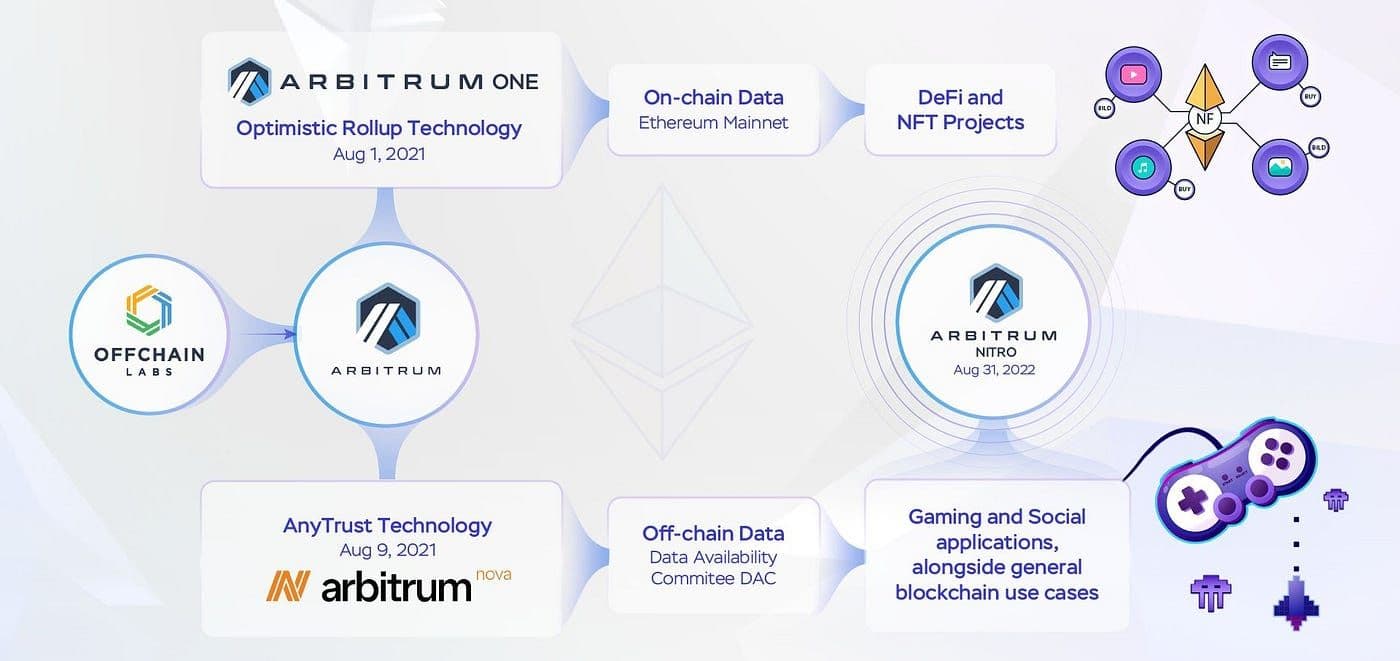
Arbitrum Nitro is the current execution engine powering the Arbitrum One and Arbitrum Nova chains. It represents a fundamental architectural shift from the legacy "Classic" stack to a fully integrated, second-generation optimistic rollup system. By replacing the custom WebAssembly (WASM) interpreter with a modified version of Geth (Go Ethereum), Nitro allows Ethereum Virtual Machine (EVM) smart contracts to run natively on Layer 2.
This transition is significant because it eliminates the overhead of translating code between different virtual machines. In the previous architecture, the sequencer had to execute transactions in WASM and then verify them in the EVM, a process that added latency and complexity. Nitro consolidates this into a single execution layer, meaning the code that runs on the L2 is identical to the code that runs on Ethereum mainnet. This ensures perfect EVM equivalence, allowing developers to deploy standard Solidity contracts without modification or specialized tooling.
The performance gains are immediate. Nitro achieves higher throughput and lower latency because it bypasses the intermediate translation steps. Transactions are processed faster, and the computational cost of validating them is reduced. This efficiency not only benefits end-users through lower gas fees but also improves the economic viability of running an L2 node.
Nitro replaces the legacy WASM interpreter with a fully integrated Geth-based execution layer, enabling native EVM compatibility without the overhead of the old VM.
The architecture also simplifies the dispute resolution process. Since the execution environment is now the standard Geth client, the fraud proof system can rely on well-understood, standardized behavior. This makes the chain more robust and easier to audit, as the core logic is derived from the same software that secures Ethereum mainnet. For the ecosystem, this means Nitro serves as a scalable foundation for Orbit chains and stylized factories, providing the speed and cost-efficiency required for high-frequency applications.
The Nitro stack and transaction flow
Arbitrum Nitro processes transactions through a streamlined pipeline that replaces the legacy WASM interpreter with a native WebAssembly engine. This architectural shift allows the sequencer to execute EVM bytecode directly, significantly reducing computational overhead. When a user interacts with a dApp, the transaction enters the Nitro stack, where it undergoes a specific sequence of ordering, execution, and state finalization.
1. Transaction submission and sequencing
The process begins when a user submits a transaction to the Arbitrum sequencer. The sequencer acts as the central coordinator, ordering transactions into blocks and broadcasting them to the network. Unlike Ethereum’s decentralized block production, Nitro’s sequencer ensures a single, canonical order of operations. This centralized ordering is critical for maintaining state consistency across the L2 before the data is posted to Ethereum L1.
2. State transition execution
Once ordered, the sequencer executes the transaction using Nitro’s native Wasm engine. This engine is optimized for speed, allowing for rapid state transitions without the latency of previous EVM implementations. The state root is updated incrementally, reflecting the new account balances and contract states. This step is where Nitro delivers its performance advantage, handling complex smart contract interactions with minimal delay.
3. Data posting and fraud proof readiness
After execution, the sequencer posts the transaction data and state root to Ethereum L1. This data availability ensures that anyone can verify the state of the L2. While Nitro relies on optimistic assumptions for speed, it remains secure through fraud proofs. If a validator detects an invalid state transition, they can initiate a dispute, forcing the network to revert to a valid state. This mechanism ensures that the L2 chain remains honest without requiring every node to re-execute every transaction.

User sends a transaction to the sequencer, initiating the L2 processing pipeline.
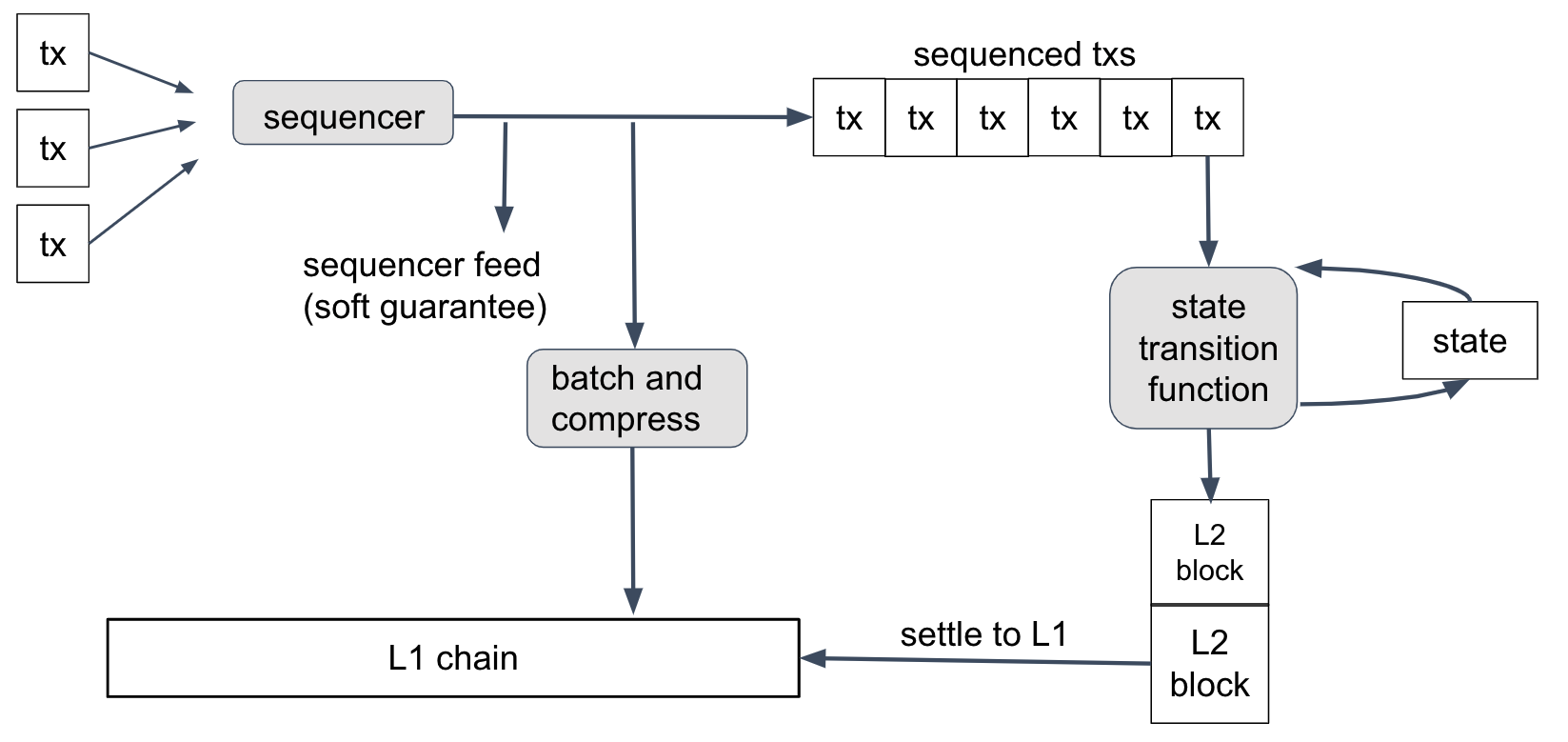
The sequencer orders the transaction, ensuring a canonical sequence for state consistency.
Nitro’s Wasm engine executes the EVM bytecode, updating the L2 state rapidly.
The sequencer posts the state root and data to Ethereum L1 for availability.
Validators monitor the chain, ready to challenge invalid state transitions via fraud proofs.
This flow highlights how Arbitrum Nitro balances speed with security. By handling the heavy lifting of execution on L2 and relying on L1 for data availability and dispute resolution, Nitro achieves the scalability needed for high-throughput applications while inheriting Ethereum’s robust security model.
Stylized factories and orbit chains
Arbitrum Nitro enables a shift from a single, shared Layer 2 to a modular ecosystem of app-specific chains. This architecture, often described as "Arbitrum Everywhere," allows developers to spin up their own L3s using stylized factories. Instead of competing for block space on a crowded mainnet, each application gets its own dedicated chain with customized parameters.
This modularity solves the congestion issues that plague monolithic L2s. By using Nitro’s lightweight rollup technology, teams can launch chains that are fully sovereign over their execution logic and gas tokens, while still inheriting the security guarantees of the underlying Arbitrum One chain. It transforms the network from a single public road into a network of specialized highways.
The following comparison highlights the structural differences between the shared L2 model and the new Orbit chains:
| Feature | Arbitrum One (Shared L2) | Orbit Chains (App-Specific L3) | Sovereignty |
|---|---|---|---|
| Execution Logic | Fixed EVM parameters | Customizable per chain | Low |
| Security Model | Shared security pool | Inherited from L2 | Medium |
| Gas Token | ARB only | Custom or ETH | High |
| Economic Isolation | Shared congestion risks | Fully isolated | High |
Orbit chains are not just isolated silos; they maintain a secure connection back to the base layer. This ensures that while developers have the freedom to tailor their chains for specific use cases—such as high-frequency trading or gaming—they do not sacrifice the robust security provided by the broader Arbitrum Nitro infrastructure.
Build and deploy with Arbitrum Nitro
Arbitrum Nitro is the software that powers all Arbitrum chains, including the mainnet and Orbit chains. Nitro provides higher throughput, faster finality, and more efficient dispute resolution than previous rollups. For developers, this means you can build on Nitro using standard EVM tooling while benefiting from the performance gains of the new stack.
Build a Nitro node locally
You can build a Nitro node locally using Docker or by compiling the source code directly. This is essential for testing Orbit chain configurations or running a local sequencer before deploying to production. The Arbitrum documentation provides detailed instructions for Debian, Ubuntu, and macOS environments.
Clone the Arbitrum node repository and install the necessary dependencies. Nitro requires Go and Docker to build the node binaries or images. Ensure your environment matches the supported operating systems listed in the official documentation.

Run the build script to compile the Nitro node. You can choose to build a Docker image for containerized deployment or compile the binaries directly for local execution. This step packages the core execution and arbitration logic into a deployable format.
Start the node with your specific configuration parameters, such as L1 RPC endpoints and chain IDs. The node will begin syncing with the L1 chain and processing Arbitrum blocks. This establishes your local Nitro instance for testing or as an Orbit chain sequencer.
Migrate or deploy DApps to Nitro
Deploying to Nitro is straightforward because it maintains full EVM equivalence. However, migrating from the Classic stack requires attention to gas estimation and sequencer health. Nitro's improved execution engine changes how gas is calculated, so you should update your front-end gas estimation logic to avoid user errors during transactions.
Before deploying, verify your DApp's compatibility with the Nitro stack. Check that your smart contracts do not rely on any deprecated Classic-specific opcodes or behaviors. Run your test suite against a local Nitro node to ensure all interactions function as expected.
-
Verify EVM compatibility with Nitro execution engine
-
Update gas estimation logic for Nitro's fee market
-
Test contract interactions on a local Nitro node
-
Check sequencer health and network status before mainnet deployment
Orbit chains and stylized factories
Nitro enables the creation of Orbit chains, which are custom Layer 3 chains built on top of Arbitrum. These chains can share security with the mainnet or operate independently. Stylized factories allow developers to deploy these chains with custom configurations, such as unique gas tokens or specific sequencer setups. This flexibility makes Nitro a powerful foundation for scalable, specialized blockchain applications.
Arbitrum Nitro vs. Classic Arbitrum
Arbitrum Nitro replaced the legacy "Classic" stack to eliminate technical debt and unlock significant performance gains. While Classic Arbitrum relied on a custom WASM-based VM for its off-chain sequencer, Nitro shifted to a pure Go Ethereum (Geth) client. This architectural change allows Nitro to run standard Ethereum execution logic natively, reducing the complexity of the codebase and improving compatibility with existing developer tools.
The move to Nitro wasn't just about code cleanliness; it was a necessary evolution for an ecosystem that had outgrown its initial design. By simplifying the execution layer, Nitro enables faster block times and lower gas costs without sacrificing the security guarantees provided by Ethereum's base layer. This foundation is now the backbone for all modern Orbit chains and Stylus factories, allowing them to build on a more robust and efficient infrastructure.
| Feature | Classic Arbitrum | Nitro |
|---|---|---|
| VM Type | Custom WASM-based VM | Pure Go Ethereum (Geth) |
| EVM Compatibility | High, but with custom extensions | Full EVM equivalence |
| Gas Costs | Higher due to WASM overhead | Significantly lower |
| Dispute Resolution | Slower, more complex proofs | Faster, more efficient fraud proofs |
| Orbit Chain Support | Limited | Native support for all Orbit chains |
No comments yet. Be the first to share your thoughts!