Arbitrum One vs Nova 2026: Core Differences
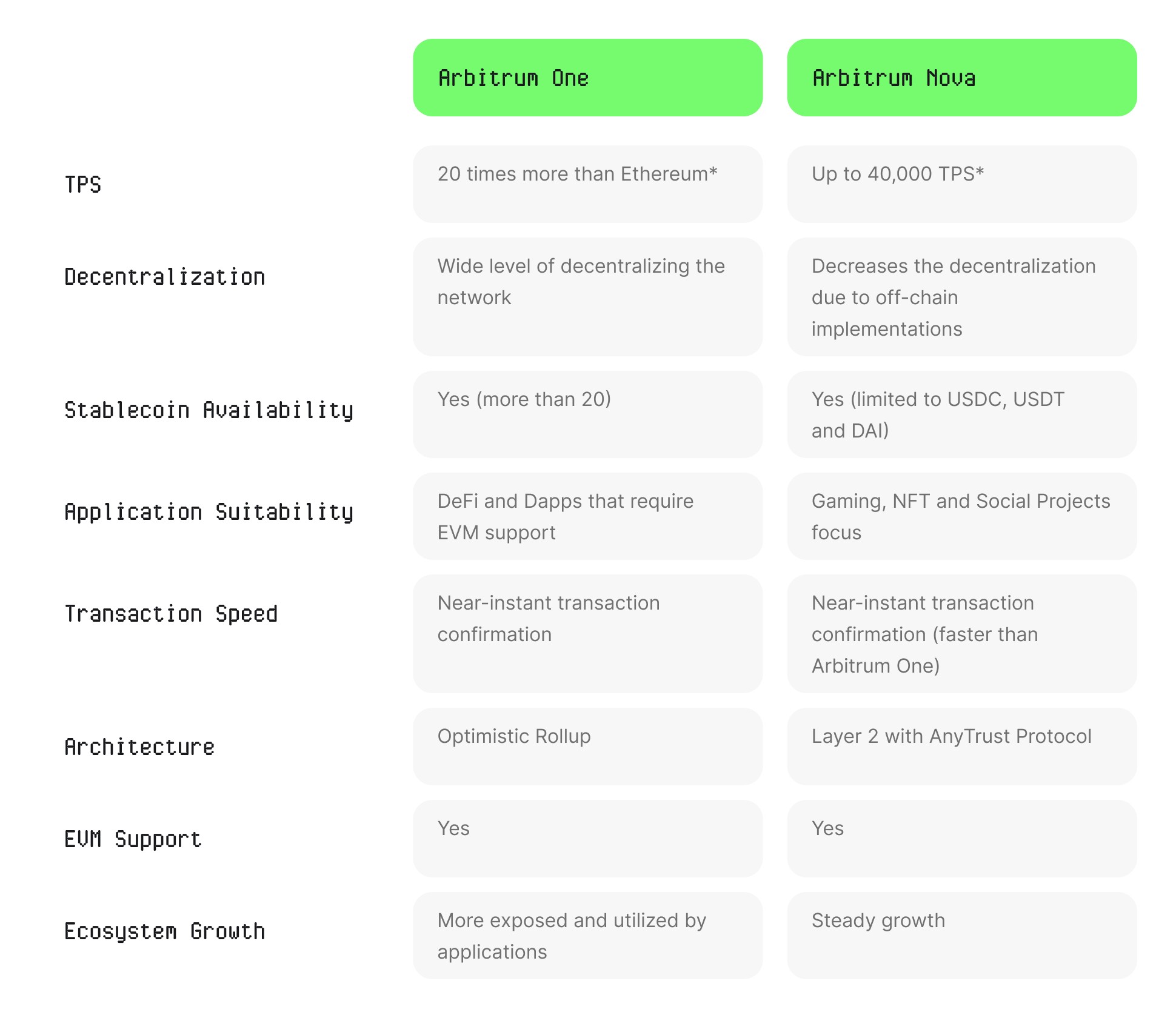
Arbitrum One and Arbitrum Nova are production chains connected to the Ethereum mainnet, but they serve different purposes through distinct security and data availability models. Arbitrum One prioritizes maximum security via full data on Ethereum. Nova prioritizes ultra-low fees via AnyTrust and off-chain data storage. Choosing between them depends on whether you value the highest level of decentralization or the lowest possible transaction costs.
Arbitrum One operates as a pure rollup. It posts all transaction data and state roots directly to Ethereum. This means the security of your funds on Arbitrum One is virtually identical to holding assets on Ethereum itself. If Ethereum is secure, Arbitrum One is secure. This model is the standard for high-value DeFi protocols, lending platforms, and institutions that cannot afford to trust external data availability committees.
Arbitrum Nova takes a different approach. It is classified as an AnyTrust Optimium. Instead of posting all data on-chain, it uses a Data Availability Committee (DAC) to store and distribute data off-chain. This significantly reduces costs, making Nova ideal for high-frequency, low-value activities like gaming, social apps, and micro-transactions. However, this comes with a trade-off: users must trust the DAC members not to collude and withhold data. As noted by L2Beat, this introduces a "trust assumption" that does not exist on Arbitrum One.
The decision between Arbitrum One and Nova is not about which chain is better, but which risk profile fits your application. For serious financial applications where security is paramount, Arbitrum One is the default choice. For applications where speed and cost are the primary drivers, and the value per transaction is low, Nova offers a compelling alternative. Understanding this fundamental difference in data availability is the first step in building or investing on the Arbitrum ecosystem.
| Feature | Arbitrum One | Arbitrum Nova |
|---|---|---|
| Security Model | Full Ethereum Security | Trust Assumption (DAC) |
| Data Availability | On-Chain (Ethereum) | Off-Chain (AnyTrust) |
| Best For | DeFi, High-Value Apps | Gaming, Social, Micro-transactions |
| Transaction Cost | Moderate | Ultra-Low |
Security Models: Rollup vs AnyTrust
Arbitrum One and Arbitrum Nova share the same underlying virtual machine, but they make a fundamental split in how they secure data. This choice defines the risk profile for every transaction on the chain. Arbitrum One prioritizes maximum security by posting transaction data directly to Ethereum. Arbitrum Nova prioritizes speed and low cost by relying on a Data Availability Committee (DAC) to store that data off-chain.
Arbitrum One: The Trustless Rollup
Arbitrum One operates as a standard optimistic rollup. Every piece of transaction data is compressed and posted to the Ethereum mainnet. This creates a "trustless" environment because the Ethereum network itself guarantees that the data is available and immutable. If a malicious actor tries to censor transactions or alter history, the Ethereum consensus layer detects the fraud and rejects the block.
This model offers the highest level of security available in the Layer-2 space. It is the preferred choice for high-value DeFi protocols, large treasury management, and applications where the integrity of the ledger is more important than the cost of a single transaction. The trade-off is higher gas fees, as you are paying for the premium of Ethereum's security.
Arbitrum Nova: The AnyTrust Optimium
Arbitrum Nova uses a different approach called AnyTrust. Instead of posting all data on Ethereum, it relies on a Data Availability Committee (DAC) to store and distribute transaction data. The DAC is a group of independent validators who sign attestations confirming that the data is available. If the committee fails to provide the data, the chain halts, but no funds are lost.
This model dramatically reduces costs, making it ideal for gaming, social apps, and high-frequency trading where millions of small transactions occur. However, it introduces a slight trust assumption. You are trusting that the DAC members will not collude to censor transactions or withhold data. For most gaming use cases, this risk is negligible, but it is a distinct difference from the pure security of Arbitrum One.
Which Model Fits Your Needs?
The decision between Arbitrum One and Nova comes down to what you value more: absolute security or transaction efficiency. If you are building a decentralized exchange or a lending protocol that handles significant capital, Arbitrum One’s rollup model provides the necessary assurance. If you are building a multiplayer game or a social platform that requires thousands of interactions per second, Nova’s AnyTrust model offers the performance needed to keep users engaged without breaking the bank.
Fee structures and transaction speed
The economic reality of using Arbitrum depends entirely on whether you prioritize maximum decentralization or raw throughput. Arbitrum One and Arbitrum Nova share the same EVM compatibility, but their underlying data availability protocols create a stark divergence in cost and speed. Arbitrum One uses a purely trustless rollup model, while Nova employs the AnyTrust protocol, which relies on a decentralized data availability committee. This architectural difference means Nova can compress data more aggressively, resulting in significantly lower fees for high-frequency interactions.
For DeFi protocols requiring complex, multi-step transactions, the difference in gas costs is substantial. Nova’s fees are often a fraction of One’s, making it the preferred choice for gaming, social apps, and high-frequency trading where transaction volume outweighs the need for immediate, independent data verification. One remains the gold standard for large-value settlements where the security model of full data availability on Ethereum is non-negotiable.
The table below outlines the estimated differences in performance and cost metrics between the two chains.
| Metric | Arbitrum One | Arbitrum Nova |
|---|---|---|
| Data Availability | Full Rollup (Trustless) | AnyTrust (Committee) |
| Estimated Gas Cost | Higher | Lower |
| Finality Time | Fast | Fastest |
| Ideal Use Case | DeFi, Large Transfers | Gaming, Social, High-Freq |
Nova’s lower costs do not come without trade-offs. The reliance on a data availability committee introduces a slight centralization risk compared to One’s fully trustless model. However, for most gaming and social applications, the speed and cost benefits far outweigh this marginal security difference. If you are building or using an app that requires thousands of transactions per day, Nova’s economic model is simply more sustainable.
Arbitrum One vs Nova: DeFi and Gaming Fit
Arbitrum One and Arbitrum Nova share the same underlying technology but serve different user intents. Arbitrum One operates as a fully trustless rollup, prioritizing security and capital preservation. This makes it the preferred home for DeFi protocols where high-value transactions require maximum decentralization guarantees.
Arbitrum Nova uses the AnyTrust protocol, which relies on a smaller data availability committee. This design choice drastically reduces costs and increases throughput, making it ideal for high-frequency applications like gaming and social networks where users expect instant, cheap interactions.
| Chain | Best For | Protocol |
|---|---|---|
| Arbitrum One | DeFi, High-Value Transactions | Trustless Rollup |
| Arbitrum Nova | Gaming, Social Apps, Micro-transactions | AnyTrust |
The choice between the two chains depends on your primary goal. If you are managing significant capital or interacting with complex financial instruments, Arbitrum One provides the necessary security framework. For gaming, NFT marketplaces, or social applications, Nova offers the speed and low fees required for a seamless user experience.
Hardware Wallets for Arbitrum Security
Regardless of which chain you choose, securing your assets is critical. Hardware wallets provide an offline storage solution that protects your private keys from online threats. When interacting with either Arbitrum One or Nova, ensure your wallet software supports both networks to manage your portfolio securely.


As an Amazon Associate, we may earn from qualifying purchases.
2026 Tooling Updates and Bridge Risks
The infrastructure supporting Arbitrum One and Nova is shifting rapidly. For developers and users, the most immediate change involves third-party tooling compatibility. As of January 31, 2026, several major providers—including Alchemy, Infura, and QuickNode—have ended support for Arbitrum Nova environments.
This update effectively forces a migration path for any dApps still relying on legacy RPC endpoints for Nova. If you are building on Nova, you must verify that your backend services connect to updated node providers before the deadline. Failure to do so will result in immediate transaction failures and broken user experiences. The Arbitrum Foundation has published the full list of affected services on their official forum, which serves as the primary reference for this transition.
Bridge Security Considerations
Moving assets between Arbitrum One and Nova requires using trusted bridge infrastructure. While the AnyTrust protocol used by Nova offers lower costs, it introduces different security assumptions compared to Arbitrum One’s fully trustless rollup model. Users should stick to official bridge portals or well-audited third-party aggregators like Chainspot to minimize smart contract risk.
Before initiating any cross-chain transfer, verify the bridge’s current status and supported token list. The gap between the two chains is bridged by specific liquidity pools, and using unverified routes can lead to lost funds or stuck assets. Always double-check the destination chain ID and contract addresses.
Checklist for Safe Migration
-
Verify your RPC provider supports the target chain post-January 2026.
-
Test small transactions on the testnet before moving mainnet assets.
-
Confirm bridge contracts are whitelisted on the official Arbitrum documentation.
-
Monitor gas fees on both chains to optimize timing for transfers.
No comments yet. Be the first to share your thoughts!