
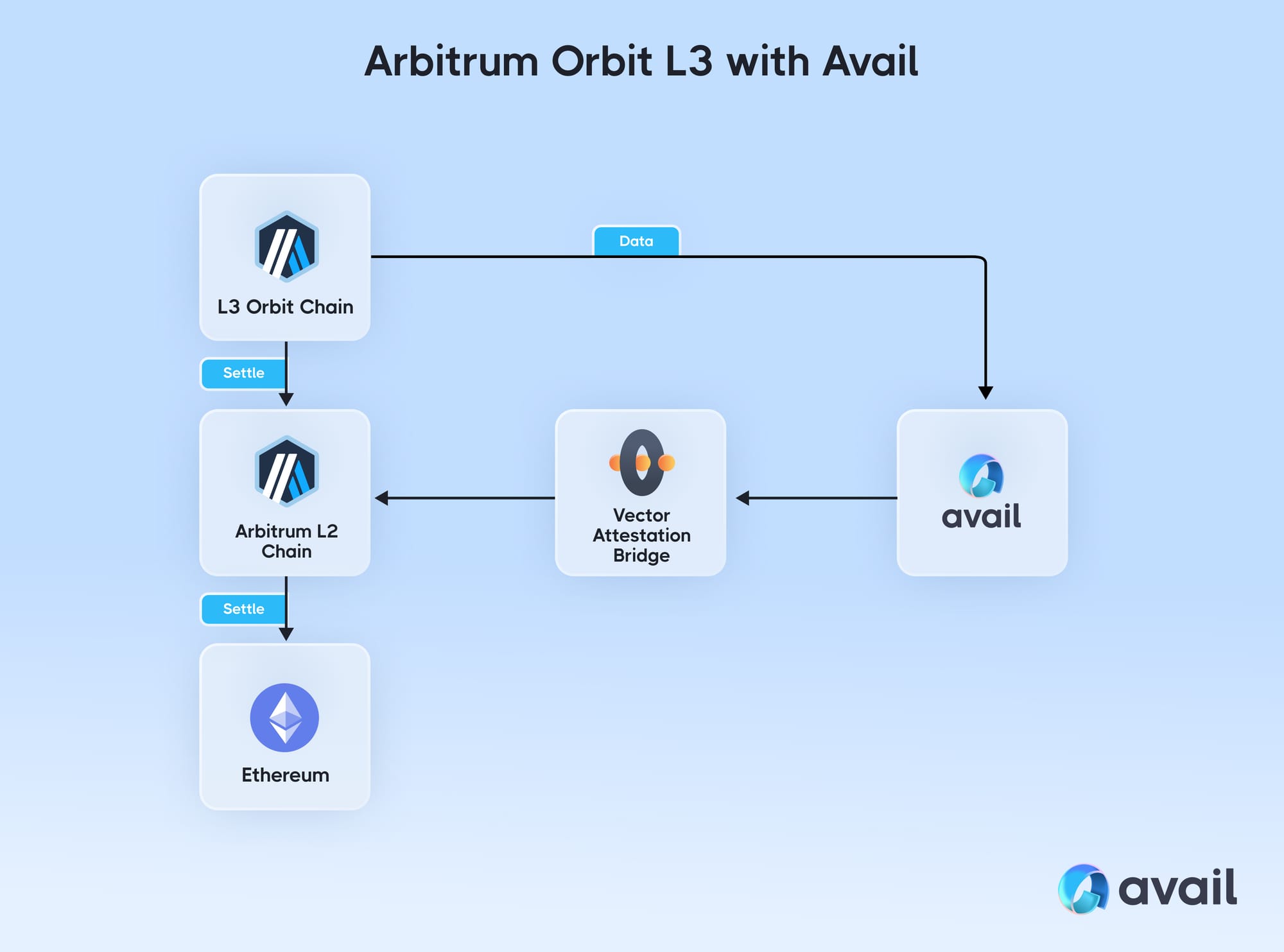
Arbitrum Orbit architecture overview
Arbitrum Orbit is not a single blockchain, but a framework for launching custom chains. It allows developers to build Layer-3 solutions that sit on top of Arbitrum One or other Orbit chains. Think of Orbit as a toolkit rather than a standalone network. It provides the underlying infrastructure, letting teams customize security, tokenomics, and performance without rebuilding the wheel from scratch.
At the core of Orbit is the Nitro stack. Nitro is Arbitrum’s modular technology that combines a WebAssembly (Wasm) core with an EVM-compatible frontend. This architecture is highly efficient, offering faster block times and lower costs than previous generations. When you launch an Orbit chain, you are deploying a chain that shares Nitro’s fraud-proof mechanisms and compression techniques.
This relationship means Orbit chains inherit the security guarantees of the base layer they connect to. They are not isolated silos; they are part of a connected ecosystem. Developers can choose to anchor their chain’s security to Arbitrum One, leveraging its established validator set, or create more specialized environments for specific applications. This flexibility is what makes Orbit distinct from traditional Layer-2 rollups.
The technical advantage lies in this modularity. By reusing Nitro, Orbit chains benefit from battle-tested technology while allowing for unique configurations. This includes support for Stylus, which enables developers to write smart contracts in languages like Rust and C++. The result is a scalable, customizable layer that fits specific needs without compromising on the security and compatibility that define the Arbitrum ecosystem.
Arbitrum One vs Orbit chain differences
Arbitrum One and Orbit chains share the same underlying Nitro technology, but they serve different architectural roles. Arbitrum One is a Layer 2 (L2) rollup that operates as a shared, public settlement layer for Ethereum. Orbit chains are Layer 3 (L3) instances built on top of Arbitrum One, offering developers the ability to customize their own blockchain parameters while inheriting the security of the L2.
Shared Security, Different Roles
The core distinction lies in how they handle security and customization. Arbitrum One provides a unified environment where all users and developers compete for the same block space and security guarantees. Orbit chains allow teams to launch dedicated L3s that settle back to Arbitrum One. This means an Orbit chain can tailor its gas token, block time, and precompiles to specific needs without fragmenting the broader Arbitrum ecosystem.
Governance and Control
Governance models also differ significantly. Arbitrum One follows a community-driven governance structure managed by the DAO. In contrast, Orbit chains give operators "full control" over their chain's economics and governance, as long as they maintain the required fraud proof infrastructure. This flexibility allows for specialized use cases, such as gaming or enterprise applications, that require specific economic incentives or regulatory compliance.
Comparison Overview
The table below summarizes the key differences between the shared L2 and customizable L3 approaches.
| Feature | Arbitrum One (L2) | Orbit Chains (L3) |
|---|---|---|
| Architecture | Shared public L2 rollup | Customizable L3 instances |
| Security Model | Inherits Ethereum security via fraud proofs | Inherits security from Arbitrum One |
| Governance | Community DAO governance | Operator-controlled (with fraud proof requirements) |
| Customization | Standard EVM parameters | Flexible gas tokens, block times, and precompiles |
| Target Use Case | General-purpose DeFi and public dApps | Specialized apps, gaming, or enterprise solutions |
For most developers, starting with Arbitrum One offers immediate access to liquidity and a broad user base. Orbit chains become necessary when specific performance requirements, economic models, or regulatory constraints cannot be met within the shared L2 environment. Both options leverage the same efficient Nitro technology, ensuring that performance remains high regardless of the chosen layer.
When to use Arbitrum One
Arbitrum One serves as the shared Layer 2 foundation for the ecosystem, prioritizing high throughput and deep liquidity over extreme customization. It operates as a single, unified chain where all transactions share the same security model and state. This architecture makes it the default choice for applications that benefit from network effects, such as decentralized exchanges (DEXs), lending protocols, and complex DeFi aggregators.
Because Arbitrum One uses Optimistic Rollup technology, it inherits Ethereum’s security while offering significantly lower fees and faster finality than the mainnet. The chain’s default block time is approximately 250 milliseconds, which can be reduced to 100 milliseconds for specific use cases via TimeBoost. This consistent performance ensures that users experience predictable transaction costs and speeds, regardless of which dApp they are interacting with.
The primary advantage of Arbitrum One is its liquidity concentration. By keeping assets and users on one chain, it minimizes fragmentation and maximizes capital efficiency. For developers building general-purpose DeFi tools, this shared environment reduces the overhead of cross-chain bridging and liquidity sourcing. It is the appropriate layer when the application’s success depends on a large, active user base and deep order books rather than niche, isolated functionality.
If your project requires high-volume trading, robust liquidity pools, or broad compatibility with existing Ethereum infrastructure, Arbitrum One provides the necessary scale and security. It is the backbone of the Arbitrum ecosystem, designed for applications that thrive on shared resources and widespread adoption.
When to launch an Orbit chain
Arbitrum Orbit exists for projects that cannot fit into the standardized Arbitrum One environment. While Arbitrum One serves as a general-purpose Layer 2 with shared security and a unified validator set, Orbit provides the framework to build custom, use-case-specific Layer 2 or Layer 3 chains. If your project requires architectural isolation, dedicated sequencing, or tokenomics that diverge from the standard ETH/ARB model, Orbit is the appropriate infrastructure choice.
Custom Tokenomics and Economic Models
Arbitrum One operates on a shared security model where validators secure the chain using ETH or staked ARB. This works well for general dApps but restricts projects that need native token utility for gas or governance. Orbit chains allow you to issue your own token for transaction fees, decoupling your economic model from Ethereum's base layer. This is essential for projects launching their own governance tokens or those operating in regulated environments where fee structures must be distinct from the broader ecosystem.
Sequencer Control and Performance
In Arbitrum One, sequencing is decentralized among a set of validators. This ensures security but introduces variability in block times and transaction finality. Orbit chains give you full control over the sequencer. You can run a single sequencer for maximum throughput and predictable latency, or deploy a custom sequencer set. This control is critical for high-frequency trading platforms, gaming networks, or enterprise applications where deterministic block production and low-latency confirmation are non-negotiable requirements.
AnyTrust vs. Rollup: Data Availability
Orbit supports two primary data availability models: AnyTrust and Rollup. The choice between them defines your security and cost profile.
- Arbitrum Rollup: Data is posted on Ethereum L1. This offers the highest level of security and decentralization, identical to Arbitrum One. It is suitable for DeFi protocols and high-value applications where censorship resistance is paramount.
- Arbitrum AnyTrust: Data is stored off-chain by a designated Data Availability Committee (DAC). This significantly reduces gas costs and increases throughput but introduces a trust assumption in the DAC. This model is ideal for applications that prioritize speed and low fees over maximum decentralization, such as social networks or content delivery platforms.
When to Stick with Arbitrum One
Despite the flexibility of Orbit, Arbitrum One remains the superior choice for most developers. It offers immediate access to a deep liquidity pool, a large user base, and established security without the operational overhead of running a separate chain. If your project does not require custom tokenomics, dedicated sequencers, or specific data availability constraints, launching on Orbit One is simpler and more efficient. The network effects of the shared chain often outweigh the technical benefits of isolation for standard dApp deployments.
Orbit chain types and choices that change the plan
Arbitrum Orbit provides two distinct architecture paths for developers: Arbitrum Rollup and Arbitrum AnyTrust. While both leverage the Nitro engine for EVM compatibility and fraud proofs, they differ fundamentally in how they handle data availability and security assumptions. Choosing between them requires balancing the need for maximum Ethereum security against the desire for lower costs and higher throughput.
Arbitrum Rollup: Maximum Security
An Arbitrum Rollup posts compressed transaction data on Ethereum L1 and relies on optimistic fraud proofs. This design inherits Ethereum’s full security model; if a malicious sequencer attempts to cheat, anyone can submit a fraud proof to revert the state. It is the most secure option but incurs higher L1 data fees because the data is publicly available on Ethereum. This model is ideal for high-value DeFi protocols or applications where trust minimization is non-negotiable [[src-serp-1]].
Arbitrum AnyTrust: Lower Cost, Different Assumptions
Arbitrum AnyTrust chains replace on-chain data posting with a Data Availability Committee (DAC). The DAC signs off on data availability, allowing the chain to post only compressed state roots on L1. This significantly reduces fees and increases throughput. However, it introduces a trust assumption: users must trust that the DAC will not collude to withhold data. If the DAC fails to publish data, users can exit the chain using the fraud proof mechanism, but the experience is less seamless than a pure Rollup. This model suits gaming, social apps, or private enterprise chains where cost efficiency outweighs the need for decentralized data availability [[src-serp-8]].
Choosing the Right Model
The decision ultimately hinges on your threat model. If you are building a financial application handling significant value, the Rollup’s Ethereum-backed security is worth the premium. If you are building a consumer app where speed and low fees are critical, and you can manage the DAC trust assumption, AnyTrust offers a more scalable foundation.
Frequently asked questions about Orbit
What is the block time for Arbitrum Orbit?
Arbitrum Orbit chains inherit the high-speed architecture of the base layer. The default block time remains at 250 milliseconds, though developers can adjust this to 100 milliseconds if needed for specific use cases. This speed ensures that custom chains built on Orbit maintain the low-latency experience users expect from Layer-2 solutions.
Is Arbitrum a good project for 2026?
Arbitrum remains a leading Layer-2 scaling solution for Ethereum, primarily using Optimistic Rollups to reduce gas fees and transaction times. Its ecosystem continues to expand with the introduction of Orbit, which allows developers to deploy custom chains using popular languages like Rust and C++ via Stylus. This technical flexibility positions it as a strong candidate for long-term infrastructure growth.
Can Arbitrum reach $10?
While an $10 price point is possible, it requires sustained market growth and significant capital inflow. Historical trends suggest such exponential appreciation may take several years to materialize. Investors should view price predictions as speculative and focus on the underlying technology's adoption rate rather than short-term volatility.
No comments yet. Be the first to share your thoughts!