Nitro rewrites the base layer
Arbitrum Nitro is not a minor software update or a simple code patch. It represents a fundamental architectural shift in how the network processes transactions. The upgrade replaces the legacy WebAssembly (WASM) interpreter with a native Go implementation of the Ethereum Virtual Machine (EVM). This change moves execution from a simulated environment to native machine code, reducing computational overhead and establishing a new baseline for performance.
Under the legacy system, transactions were processed through a WASM interpreter, which added significant latency and complexity. Nitro’s native Go EVM executes opcodes directly on the host processor. This structural change is the primary driver behind the observed improvements in block times and gas efficiency. The sequencer, responsible for transaction ordering, now operates with greater speed and consistency, creating a more reliable foundation for decentralized applications.
The impact of this shift is visible in the network’s total value locked (TVL) metrics. By lowering the cost of execution and increasing throughput, Nitro has made the network more attractive to developers and capital. This is not merely about being "faster" in a vague sense; it is about reducing the computational friction that previously limited scale. The native execution model allows for denser transaction packing and more predictable fee structures, setting the stage for the TVL growth seen in 2026.
Fee and speed comparison
The transition from the legacy Arbitrum stack to Nitro represents a fundamental shift in how transaction costs and throughput are calculated. Nitro replaces the WASM-based execution environment with a native Geth client, allowing it to process transactions using standard EVM opcodes. This architectural change reduces the computational overhead required for verification, directly impacting gas efficiency and block times.
Legacy Arbitrum relied on a custom compiler that translated Solidity to WASM before execution. While functional, this added a layer of abstraction that increased the gas cost for complex smart contracts. Nitro eliminates this intermediate step. By running EVM code natively, Nitro achieves higher throughput and lower fees without requiring changes to existing smart contracts or developer tooling.
The table below details the structural differences in performance metrics between the two stacks. These figures reflect observed network conditions and official specifications for the Nitro upgrade.
| Metric | Legacy Arbitrum | Nitro |
|---|---|---|
| Gas Cost Efficiency | Higher overhead due to WASM compilation | Lower costs via native EVM execution |
| Block Time | Approximately 300ms | Approximately 250ms |
| Finality Speed | Standard optimistic rollup finality | Faster fraud proof generation |
| Throughput | Limited by WASM execution limits | Higher throughput via Geth optimization |
These improvements are not merely theoretical. The reduction in gas costs has made Arbitrum more competitive against other layer-2 solutions, contributing to significant shifts in total value locked (TVL). For users and developers, this means lower transaction fees and faster confirmation times for the same set of operations.
How TVL growth tracks the upgrade
The migration to Nitro was not merely a software update; it was a structural shift that realigned Arbitrum’s economics with developer and user incentives. By replacing the legacy WASM execution environment with a Geth-based stack, Nitro eliminated the computational overhead that had previously capped throughput. This technical change directly impacted market behavior, driving the 2026 TVL records by making the network viable for high-frequency applications that were previously cost-prohibitive on legacy Arbitrum.
The correlation between reduced gas fees and capital inflow is distinct. As transaction costs dropped, the barrier to entry for complex DeFi strategies lowered significantly. Developers migrated assets to Nitro not just for efficiency, but because the new architecture allowed for more sophisticated smart contract interactions without the risk of out-of-gas errors or excessive slippage. This reliability attracted institutional capital seeking predictable execution costs.
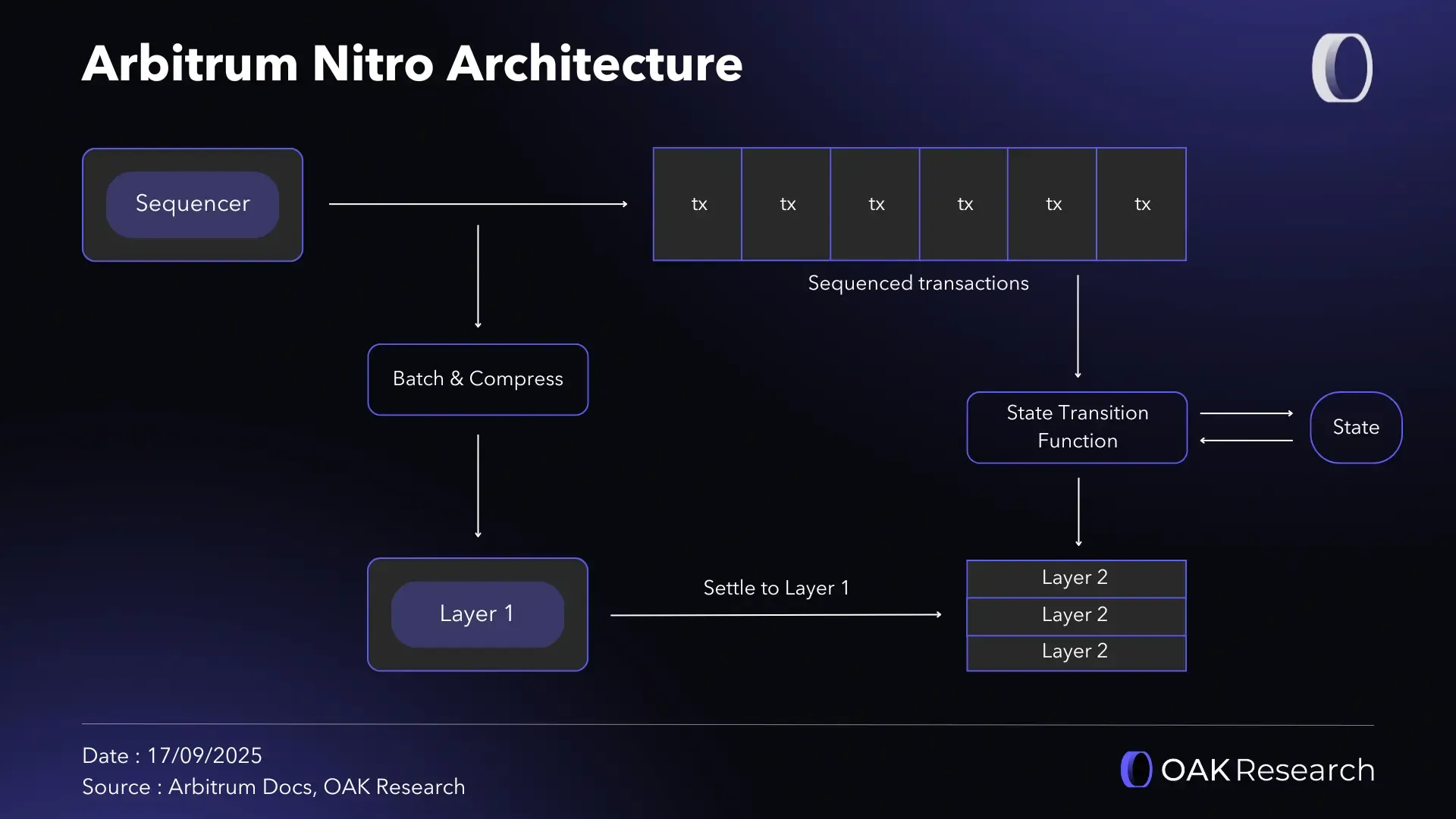
The data confirms this shift. Post-upgrade, Arbitrum’s TVL grew at a rate that outpaced most other L2s, driven by a surge in active addresses and transaction volume rather than speculative hype. The network’s ability to handle higher throughput without compromising security provided the stability required for long-term capital deployment. This structural advantage cemented Nitro’s position as the dominant execution layer for the Arbitrum ecosystem.
Developer migration and ecosystem fit
For builders, the shift from Legacy Arbitrum to Nitro is less about compatibility and more about infrastructure efficiency. Nitro maintains full EVM equivalence, meaning existing Solidity contracts compile and deploy without modification. However, the underlying architecture has changed from a WASM-based execution environment to a native Geth implementation. This shift reduces the computational overhead of transaction execution, resulting in lower gas costs and faster block times for new deployments.
The primary advantage for developers is the alignment with standard Ethereum tooling. Nitro allows teams to use familiar frameworks like Hardhat and Foundry with minimal configuration changes. The native EVM execution engine also ensures that transaction semantics remain identical to Ethereum mainnet, reducing the risk of unexpected behavior during migration. This compatibility lowers the barrier to entry for new dApps while providing a more predictable environment for existing projects.
Migration is straightforward for most projects. Teams can redeploy contracts to the Nitro chain using standard deployment scripts. The main consideration is verifying that any off-chain indexing services or oracle networks support the updated block structure. For most use cases, the transition is automatic, but testing in a staging environment is recommended to catch any edge cases related to gas estimation or block timing.
Common questions about Nitro
The transition from the legacy Nitro stack to the current Nitro architecture introduced structural changes that affect node operators and smart contract developers differently. Below are specific questions regarding backward compatibility, security mechanisms, and infrastructure requirements based on official Arbitrum documentation.
No comments yet. Be the first to share your thoughts!