Arbitrum One 2026: The DeFi Standard
Arbitrum One has cemented its position as the dominant Layer 2 for serious decentralized finance. As of May 2026, the network supports over $17 billion in total value locked (TVL), making it the primary choice for complex DeFi applications that require Ethereum-level security without the mainnet's congestion [src-serp-8]. While other chains compete on speed or cost, Arbitrum One prioritizes stability and compatibility, ensuring that major protocols remain secure and functional.
The network’s success stems from its optimistic rollup architecture, which allows developers to deploy existing Ethereum smart contracts with minimal changes. This compatibility has attracted the largest ecosystem of DeFi protocols, including leading lending platforms, decentralized exchanges, and stablecoin issuers. For users, this means deeper liquidity and better execution prices compared to smaller or newer Layer 2s. The tradeoff for this security and liquidity is slightly higher latency than newer, more specialized chains. However, for high-value transactions and complex multi-step DeFi operations, the reduced risk of failure and superior capital efficiency make Arbitrum One the reliable standard for 2026.
Arbitrum Nova: Built for Speed and Gaming
Arbitrum Nova is the high-performance sibling to Arbitrum One, designed specifically for applications that prioritize speed and user experience over absolute decentralization. While One serves as the primary hub for decentralized finance with its focus on security and capital efficiency, Nova targets the gaming, social, and entertainment sectors where transaction latency and cost are the primary friction points.
The network achieves this by using a specialized data availability layer. Instead of posting all transaction data to Ethereum mainnet, Nova uses a combination of Ethereum and other data availability providers. This reduces the cost of posting data significantly, allowing for lower fees and faster finality. For a game developer, this means players can interact with the blockchain in real-time without waiting for long confirmation times or paying high gas fees for minor actions.
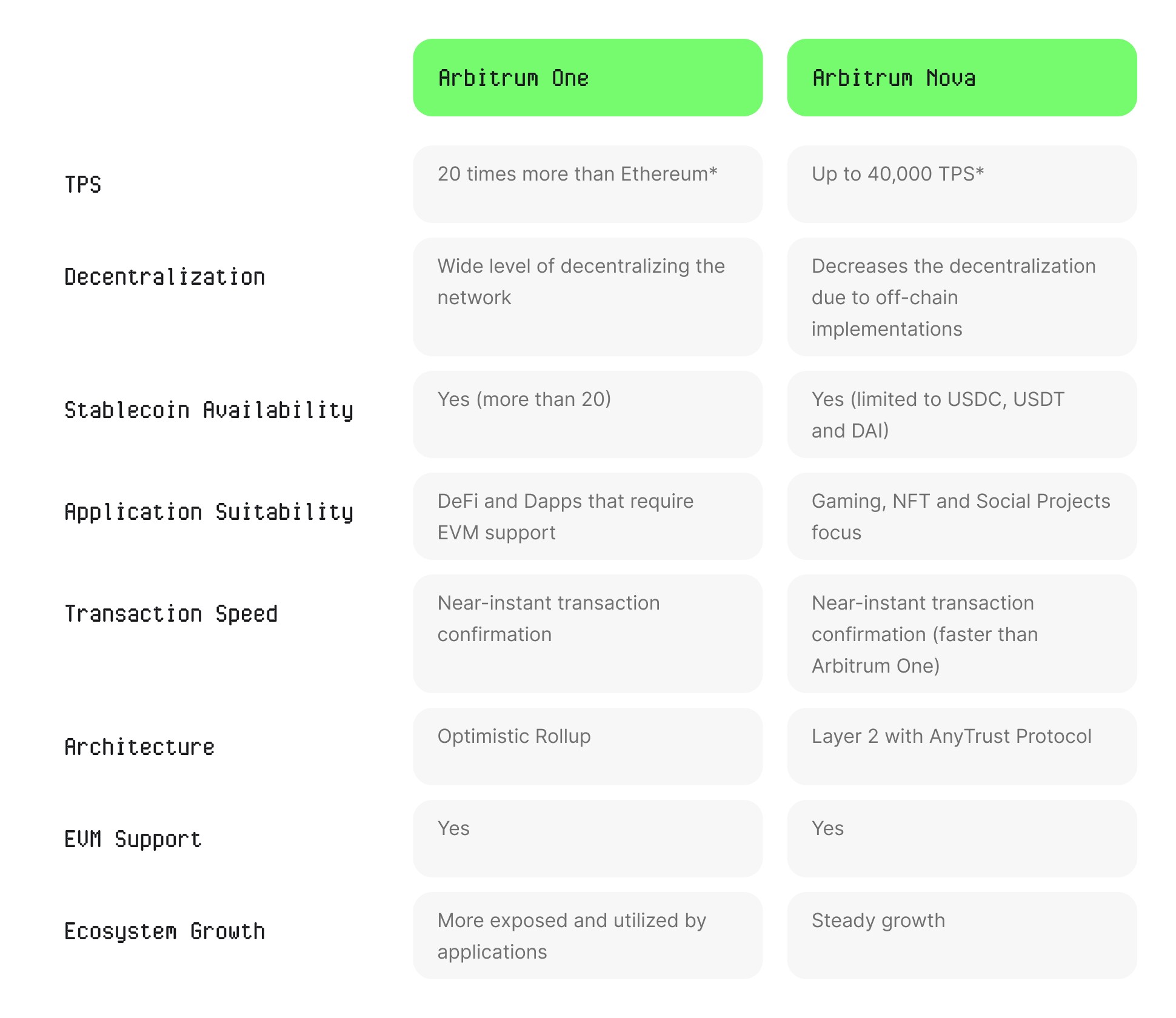
This distinction is critical for developers choosing between the two. If your application involves complex financial instruments, staking, or large value transfers, Arbitrum One remains the standard. However, if your use case involves frequent, small transactions—such as in-game purchases, social media interactions, or content creation rewards—Nova provides the necessary throughput to keep the experience smooth and affordable.
The ecosystem is growing rapidly, with several major gaming and social projects already deploying on Nova. This focus on niche use cases allows Arbitrum to serve a broader range of applications, ensuring that the network can support both the heavy lifting of DeFi and the high-frequency demands of consumer-facing apps.
Arbitrum One vs Nova: Fees, Speed, and Security
Choosing between Arbitrum One and Arbitrum Nova depends on what you value most: deep liquidity or low-cost speed. Arbitrum One is the primary chain for decentralized finance (DeFi), offering robust security and high throughput for complex smart contracts. Arbitrum Nova, a separate chain optimized for high-frequency interactions, prioritizes minimal fees and instant finality for gaming and social applications.
Gas Fees and Transaction Costs
Nova’s gas fees are significantly lower than Arbitrum One’s, often costing a fraction of a cent per transaction. This makes Nova ideal for micro-transactions, such as in-game assets or social media interactions. Arbitrum One fees are higher but remain competitive compared to Ethereum mainnet, reflecting the greater computational resources required for DeFi operations.
Finality and Speed
Arbitrum One provides faster finality than Ethereum mainnet, typically settling transactions within minutes. Nova offers even quicker finality, designed for real-time applications where latency matters. For users prioritizing instant feedback, Nova’s architecture is better suited, while Arbitrum One balances speed with the security guarantees needed for financial transactions.
Security Models
Both chains inherit security from Ethereum through fraud proofs, but they differ in risk profiles. Arbitrum One has a larger validator set and more decentralized security, making it the safer choice for holding significant value. Nova’s smaller validator set and focus on speed introduce slightly higher centralization risks, which is acceptable for low-value, high-volume use cases.
| Feature | Arbitrum One | Nova | Best For |
|---|---|---|---|
| Gas Fees | Low | Very Low | Nova |
| Transaction Speed | Fast | Very Fast | Nova |
| Security Level | High | Medium | Arbitrum One |
| Primary Use Case | DeFi & NFTs | Gaming & Social | Use Case |
Where to Deploy Your Assets
Your choice between Arbitrum One and Arbitrum Nova depends on what you are building. The two chains share security but serve different purposes. Arbitrum One is the general-purpose chain for DeFi and high-value transactions. Arbitrum Nova is a specialized chain for gaming and social applications.
Arbitrum One: DeFi and High-Value Transactions
Arbitrum One is the primary Layer 2 network for decentralized finance. It supports over $17 billion in total value locked, making it the most liquid and secure environment for trading. If you are moving significant capital, using stablecoins, or interacting with complex protocols, Arbitrum One is the correct choice. Its robust security model and deep liquidity minimize slippage and risk.
Arbitrum Nova: Gaming and Social Apps
Arbitrum Nova is designed for high-frequency, low-value interactions. It uses a fraud-proof system optimized for speed and cost, making it ideal for on-chain gaming and social applications. If your assets are used for micro-transactions, in-game items, or frequent small transfers, Nova offers a smoother experience. The lower costs allow for gameplay mechanics that would be too expensive on Arbitrum One.
Bridging Safely
Regardless of your choice, always use official bridges. Unofficial bridges are common targets for scams. The official Arbitrum bridge is the safest way to move assets between Ethereum and either L2. Never connect your wallet to unknown bridge interfaces.
ARB Token Outlook and Market Risks
The Arbitrum (ARB) token faces a challenging environment in 2026, with market sentiment reflecting significant volatility and investor caution. While Arbitrum remains a dominant Layer 2 network, its token price has struggled to maintain momentum, raising questions about its long-term value proposition.
Analysts project that ARB could trade around $0.125 by late summer 2026, with some forecasts suggesting a potential dip to $0.121 in August. These predictions highlight the uncertainty surrounding the token's trajectory, as broader crypto market trends and network-specific developments continue to influence investor behavior.
The token's performance is closely tied to the success of the Arbitrum ecosystem, including network adoption, developer activity, and competition from other Layer 2 solutions. While the network continues to grow, the token's price action suggests that market participants are weighing the risks and rewards carefully.
Common Questions About Arbitrum Networks
Users often confuse Arbitrum One and Arbitrum Nova, or wonder how the ARB token fits into the ecosystem. Here are direct answers to the most frequent questions regarding bridging, fees, and token utility.
No comments yet. Be the first to share your thoughts!