
Arbitrum One vs Nova 2026: Quick Answer
The difference between Arbitrum One and Arbitrum Nova comes down to a trade-off between security and speed. Arbitrum One uses a purely trustless rollup protocol, meaning it relies on cryptographic proofs to guarantee security. This makes it the standard for DeFi, where protecting large capital reserves is the top priority. Arbitrum Nova uses an AnyTrust protocol, which relies on a smaller group of nodes to publish data. This makes it faster and cheaper, but slightly less decentralized.
If you are building a DeFi protocol, staking platform, or handling significant value, stick with Arbitrum One. The extra security guarantees are worth the slightly higher fees. If you are building a game, social app, or high-frequency trading tool, Arbitrum Nova offers the throughput you need. The lower costs make micro-transactions feasible, which is essential for user engagement in gaming.
For most users, the choice is clear. Use Arbitrum One for finance. Use Arbitrum Nova for entertainment. Both chains are fast, but they serve different masters.
Core Differences: Trust Models and Tech
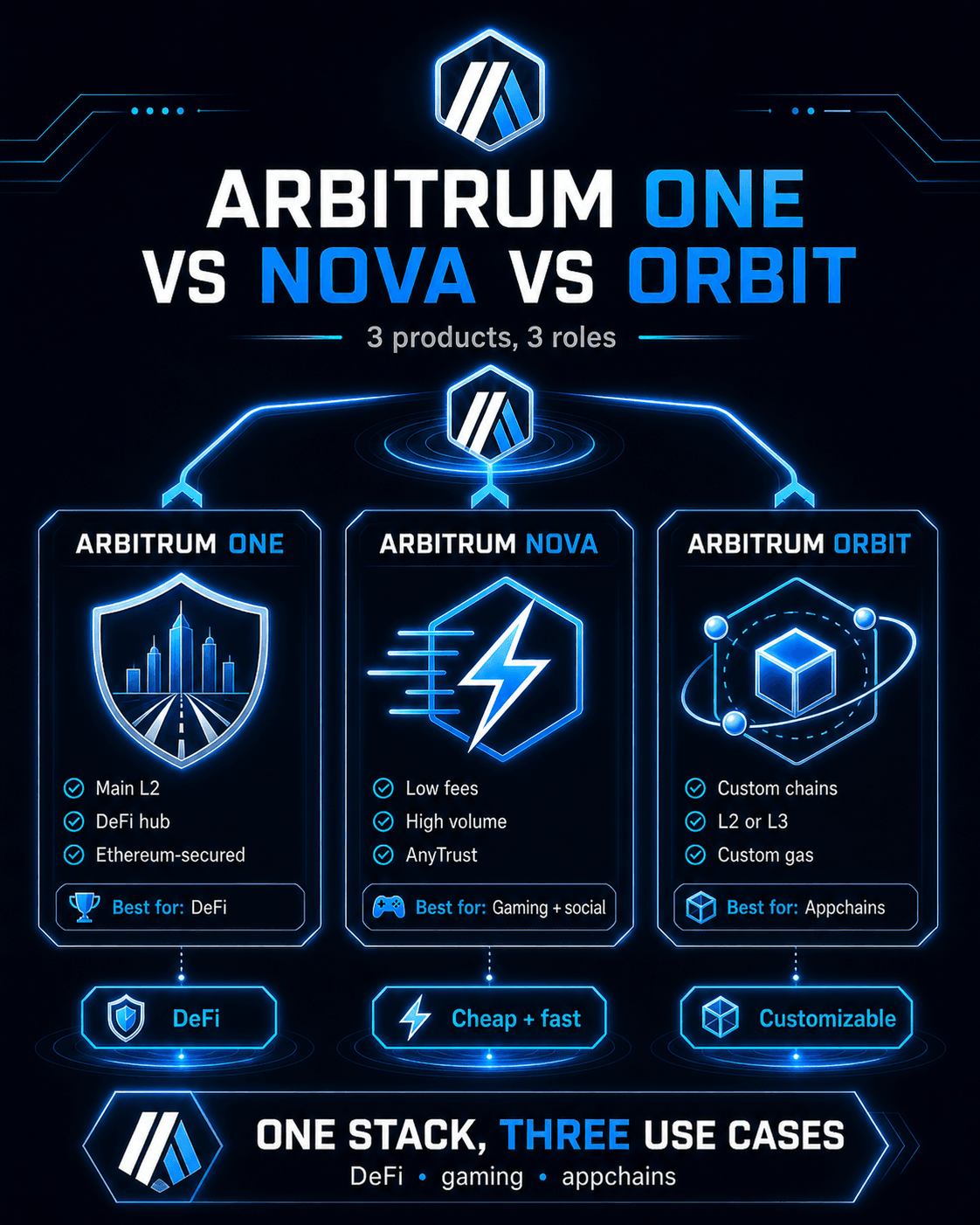
Arbitrum One and Arbitrum Nova solve Ethereum scaling with fundamentally different security trade-offs. Arbitrum One runs a fully trustless rollup, relying on Ethereum's cryptographic guarantees for data availability. Arbitrum Nova uses an AnyTrust model, trading some decentralization for speed by storing data on a separate set of nodes.
How Arbitrum One Ensures Security
Arbitrum One is a pure optimistic rollup. Every transaction's data is posted to Ethereum mainnet. This means anyone can verify the state of the chain, making it the most secure Layer-2 option available. It is the standard for high-value DeFi protocols where trustlessness is non-negotiable.
How Arbitrum Nova Prioritizes Speed
Arbitrum Nova stores transaction data off-chain on a distributed set of "DA nodes." While Ethereum still secures the execution logic, the data availability relies on the honesty of these nodes. This reduces costs and increases throughput, making Nova ideal for high-frequency, low-value activities like gaming or social apps.
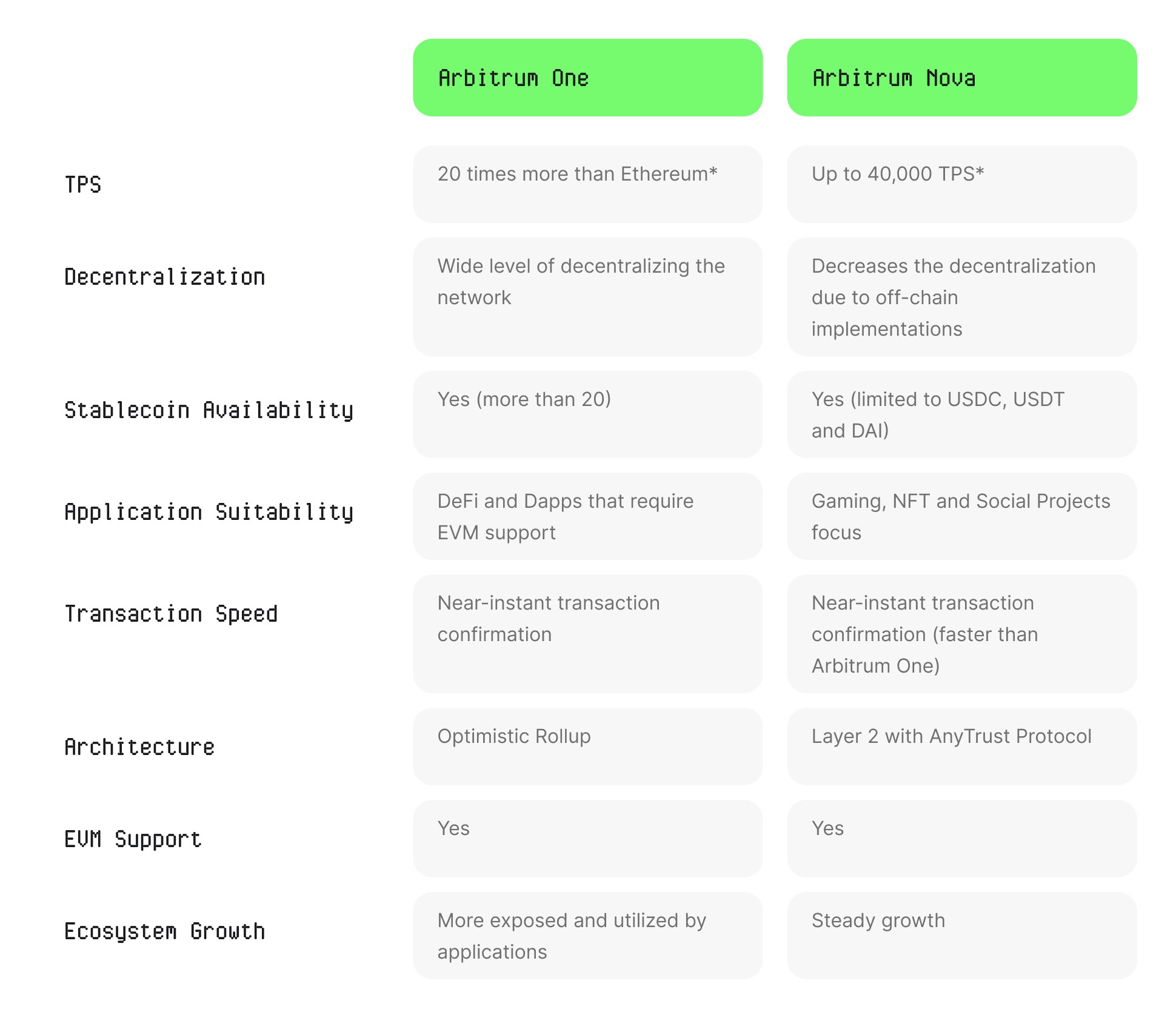
Side-by-Side Comparison
The table below summarizes the technical divergence between the two chains.
| Feature | Arbitrum One | Arbitrum Nova |
|---|---|---|
| Trust Model | Fully Trustless Rollup | AnyTrust (Mostly Trustless) |
| Data Availability | Ethereum Mainnet | DA Nodes (Off-chain) |
| Best Use Case | High-value DeFi | Gaming & Social Apps |
| Finality Time | ~7 days (challenge period) | ~10 minutes |
Which Model Fits Your Needs?
If you are building a DeFi protocol handling significant value, Arbitrum One’s full trustlessness is the only safe choice. The security cost is worth the premium. If you are launching a game or social platform where millions of low-value transactions occur, Nova’s AnyTrust model offers the necessary speed and lower fees without compromising on execution security.
For users prioritizing physical security of their private keys while interacting with these chains, consider using a hardware wallet.


As an Amazon Associate, we may earn from qualifying purchases.
Costs and speed: fees compared
Arbitrum Nova is built for speed and low cost, using the AnyTrust model to cut fees significantly compared to Arbitrum One. While One prioritizes maximum decentralization by posting data directly to Ethereum, Nova stores data off-chain in a fraud-proof system. This trade-off makes Nova much cheaper to use, often costing pennies per transaction.
The difference is stark when you look at the numbers. Arbitrum One handles standard DeFi trades with reasonable fees, but it can get expensive during high network congestion. Nova’s gas fees are typically 90-95% lower than One’s. For high-frequency interactions, this gap is the deciding factor.
This cost advantage makes Nova ideal for gaming and social apps where users make many small transactions. Imagine a game where you buy five items a minute; on One, those fees add up fast. On Nova, they are negligible. DeFi traders who arbitrage small price differences also prefer Nova because the margins survive the gas costs.
However, you should not use Nova for large, long-term value storage. If you are moving a significant amount of capital into a new protocol, Arbitrum One offers stronger security guarantees. The AnyTrust model relies on a smaller set of nodes to verify data availability, which is faster but less decentralized than One’s approach. For most daily interactions, though, Nova’s low fees are hard to beat.


As an Amazon Associate, we may earn from qualifying purchases.
Ecosystems: DeFi vs Gaming
Arbitrum One and Arbitrum Nova have carved out distinct niches within the Ethereum scaling landscape. Arbitrum One serves as the primary home for decentralized finance, hosting the majority of the ecosystem's total value locked (TVL). In contrast, Arbitrum Nova is engineered for high-throughput consumer applications, particularly gaming and social platforms that require rapid, low-cost interactions.
Arbitrum One functions as the financial backbone of the network. It supports major DeFi protocols like GMX, Camelot, and Aave, which rely on the chain's deep liquidity and robust security model. The network has processed over two billion lifetime transactions, cementing its role as a hub for serious financial activity. Users choosing One are prioritizing capital efficiency and access to established financial primitives over raw transaction speed.
Arbitrum Nova, however, trades some of that financial depth for performance. By utilizing the AnyTrust protocol, it achieves significantly higher throughput and lower fees, making it ideal for applications where users expect near-instant feedback. This architecture has attracted a vibrant gaming ecosystem, including titles like Treasure and Illuvium, as well as social apps that benefit from frequent, micro-transactions. For gamers and social users, Nova offers a smoother experience that feels closer to Web2, while keeping costs negligible.
The choice between the two comes down to your primary activity. If you are trading, lending, or providing liquidity, Arbitrum One is the necessary destination. If you are playing games, minting low-cost NFTs, or engaging in social interactions, Nova provides the speed and affordability that One cannot match.


As an Amazon Associate, we may earn from qualifying purchases.
Tooling updates and bridge routes
The development landscape for Arbitrum Nova shifted in early 2026, introducing friction for some workflows. Effective January 31, 2026, major third-party providers like Alchemy discontinued support for Arbitrum Nova environments. This change forces developers and users relying on those specific infrastructure layers to migrate to alternative nodes or switch to Arbitrum One for broader compatibility.
Bridging assets between these chains remains straightforward but requires choosing the right route. For moving funds from Arbitrum Nova to Arbitrum One, or back to Ethereum L1, centralized exchanges often offer the fastest exit liquidity. However, for direct cross-chain transfers, bridges like Chainspot facilitate seamless asset movement between Nova and One.
If you are building high-frequency gaming applications that rely on Nova's low fees, ensure your backend infrastructure is updated to handle the new node landscape. For general DeFi usage, Arbitrum One’s expanded tooling ecosystem makes it the safer default for most users.
Hardware security recommendation
Securing assets across multiple L2s requires robust local storage. The Ledger Nano X offers dedicated support for both Arbitrum One and Nova, ensuring your keys never touch an internet-connected device during transactions.

As an Amazon Associate, we may earn from qualifying purchases.
Frequently asked: what to check next
Is Arbitrum One the same as Arbitrum Nova?
No. Arbitrum One uses a purely trustless rollup protocol, securing funds through Ethereum's native fraud proofs. Arbitrum Nova uses the AnyTrust protocol, which relies on a dataset committee to publish data. This trade-off makes Nova significantly faster and cheaper for high-frequency tasks like gaming, but One remains the standard for high-value DeFi where maximum security is non-negotiable.
What is Arbitrum One used for?
Arbitrum One is the primary hub for Ethereum-scale decentralized finance. It hosts the majority of the ecosystem's total value locked (TVL), supporting complex DeFi applications, lending protocols, and high-value NFTs. If you are moving substantial capital or interacting with established financial protocols, One is the intended environment.
What is the future of Arbitrum?
Arbitrum is evolving toward a multi-chain ecosystem where One and Nova serve different niches. While Nova captures volume in social and gaming sectors, One continues to consolidate its position as the dominant Ethereum L2 for finance. Long-term, the distinction between the chains will likely matter less as cross-chain messaging becomes seamless, but for now, their security models remain distinct.
How do I secure my Arbitrum assets?
Regardless of which chain you use, your private keys are the primary point of failure. Hardware wallets provide the best protection against phishing and malware. The Ledger Nano X supports Arbitrum natively, allowing you to manage tokens on both One and Nova securely offline.


As an Amazon Associate, we may earn from qualifying purchases.
No comments yet. Be the first to share your thoughts!