Arbitrum stylus choices that change the plan
Choosing between the traditional EVM environment and Stylus comes down to matching your tech stack to your performance needs. Stylus allows developers to write smart contracts in Rust, C, and C++ by compiling them to WebAssembly (WASM). This opens the door to high-performance applications that were previously too expensive or complex to build on an L2, but it introduces a different set of operational constraints compared to the mature EVM ecosystem.
The decision isn't just about code preference; it's about which constraints your project can absorb. Below is a direct comparison of the two environments to help you weigh the variables that matter most for your specific use case.
| Feature | Arbitrum EVM | Arbitrum Stylus | Tradeoff Impact |
|---|---|---|---|
| Language Support | Solidity, Vyper | Rust, C, C++, WASM | High |
| Developer Pool | Large, mature ecosystem | Growing, systems-focused | Medium |
| Gas Costs | Optimized for EVM opcodes | Lower for compute-heavy logic | High |
| Security Model | Battle-tested, extensive audits | Newer, requires Rust/C expertise | High |
| Tooling | Standard (Hardhat, Foundry) | Rust toolchain, Stylus SDK | Medium |
| Interoperability | Native across all L2s | Arbitrum-specific (WASM) | Low |
When to Stick with EVM
The EVM environment remains the default for most DeFi protocols, NFT marketplaces, and general-purpose dApps. If your team already has Solidity expertise and your logic doesn't require extreme computational density, the EVM offers the path of least resistance. The tooling is standardized, auditors are familiar with the patterns, and interoperability with other chains is seamless. You avoid the learning curve of systems-level programming and can leverage a vast library of existing libraries and contracts.
When to Choose Stylus
Stylus shines when you need to run complex computations on-chain that would otherwise be prohibitively expensive in Solidity. Use cases include high-frequency trading bots, complex on-chain gaming logic, or data-heavy applications like decentralized AI inference. If your team is comfortable with Rust or C++, Stylus allows you to write efficient, safe code that runs significantly faster than equivalent EVM bytecode. You gain substantial gas savings for compute-heavy tasks, but you must manage the newer security landscape and the specialized talent pool required to build and audit WASM contracts.
Where each option wins
Use this section to make the Arbitrum One vs. Stylus decision easier to compare in real life, not just on paper. Start with the reader's actual constraint, then separate must-have requirements from details that are merely nice to have. A practical choice should survive normal use, maintenance, timing, and budget. If a recommendation only works in an ideal situation, call that out plainly and give the reader a fallback path.
The simplest way to use this section is to write down the must-have criteria first, then compare each option against those criteria before weighing nice-to-have features.
Details Worth Checking
Stylus expands what’s possible on Arbitrum, but it also introduces new variables into your risk assessment. Before committing capital or migrating a core system, verify these specific constraints and potential failure points.
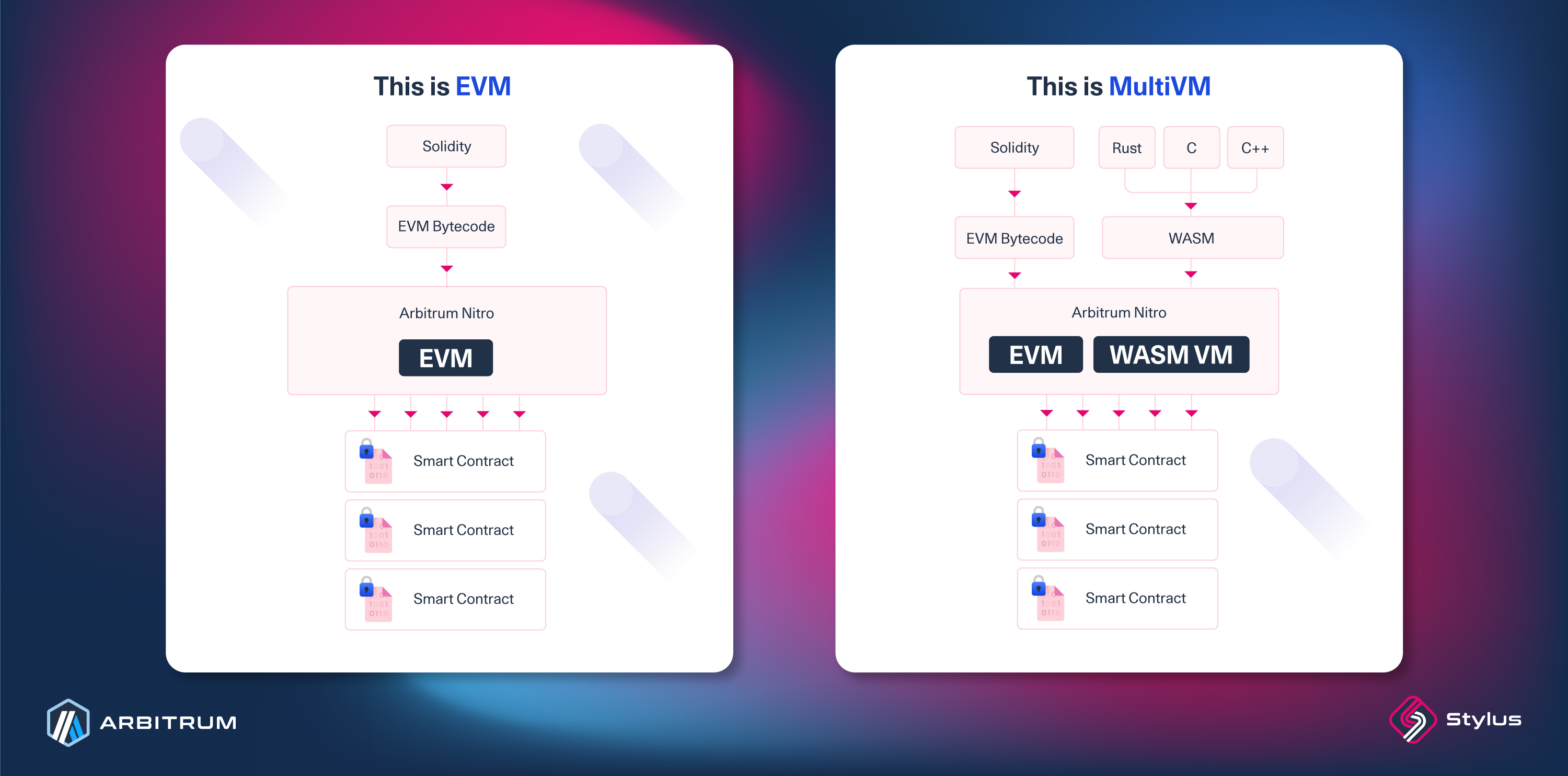
Stylus supports Rust, C, and C++ via WebAssembly (WASM). However, not every standard library function is available. Check the official documentation to ensure your specific dependencies, such as heavy cryptographic libraries or complex memory allocators, are compatible with the Stylus runtime.
Moving assets between Ethereum L1 and Arbitrum involves bridge risk. Withdrawals from L2 to L1 are not instant; they typically require a seven-day challenge period. If your application requires rapid liquidity movement or relies on high-frequency trading, these delays can create slippage or expose positions to market volatility.
Arbitrum relies on a centralized sequencer for transaction ordering, which introduces centralization risk. Additionally, the ARB token governance model allows for protocol upgrades that could technically alter network rules. Review the current governance proposals to understand if any upcoming changes impact your smart contract’s execution environment.
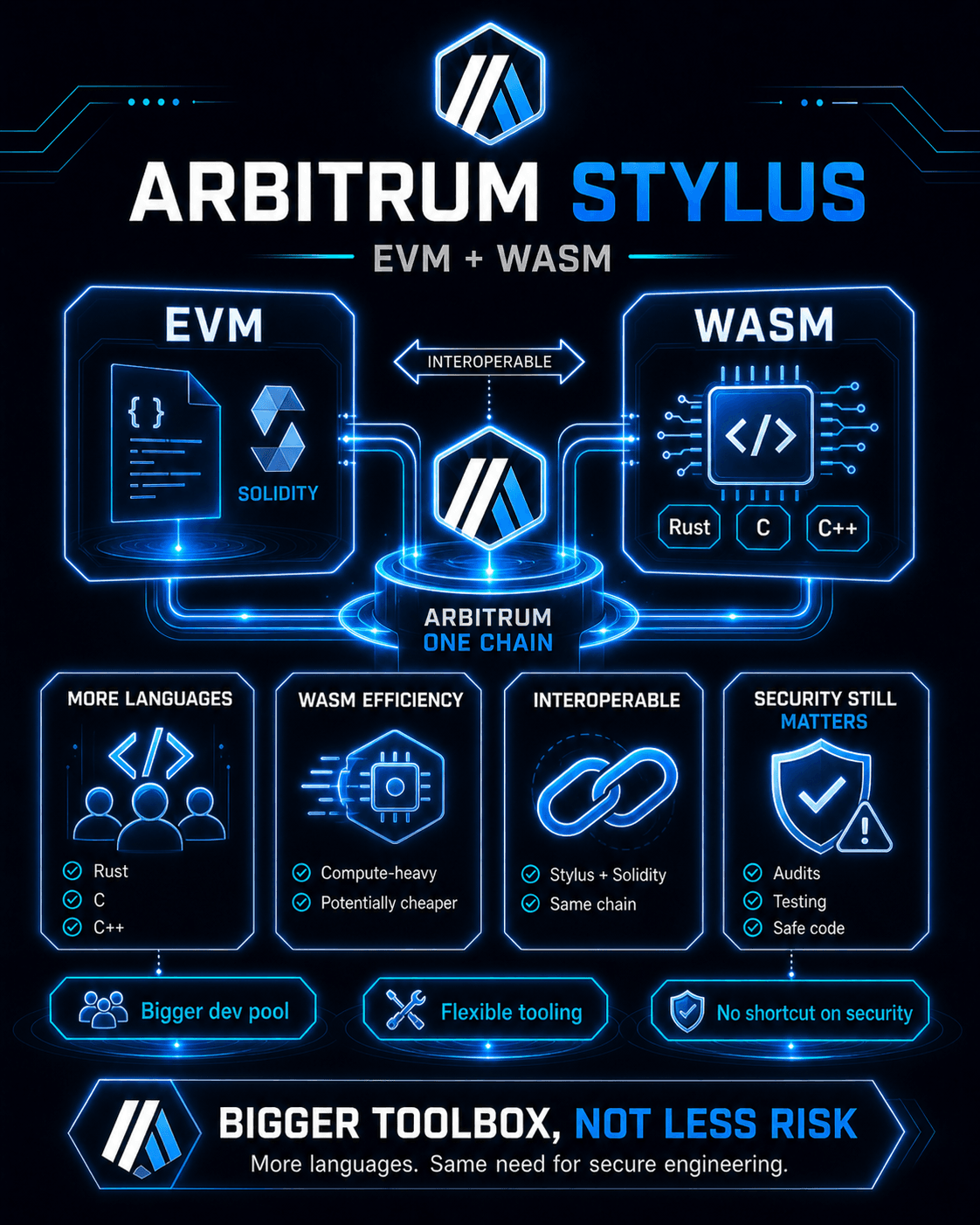
There remains a non-zero chance that the Arbitrum codebase contains undiscovered vulnerabilities. Users should carefully factor this risk into their decision to use Arbitrum One or Stylus. Conduct independent security audits of your Stylus contracts, as the novelty of non-EVM execution on L2 may attract different types of exploit vectors than standard Solidity.
Arbitrum stylus: what to check next
Before committing to a development stack or migrating funds, it helps to clarify how Stylus changes the Arbitrum landscape and what risks remain. The following answers address the most common practical objections.
No comments yet. Be the first to share your thoughts!