What changed in the Nitro upgrade
Arbitrum Nitro was not a simple feature patch or a sidecar addition to the existing chain. It was a complete architectural replacement of the execution engine. The upgrade replaced the legacy custom WebAssembly (WASM) environment with a Geth-based EVM engine. This shift moved Arbitrum from a partially compatible state to full EVM equivalence, aligning its execution layer directly with Ethereum’s standard.
In the classic Arbitrum model, the sequencer used a custom WASM interpreter to process transactions. While innovative at the time, this approach created a gap in compatibility. Smart contracts written for Ethereum often required careful adaptation to run on the older system. Nitro eliminated this friction by embedding Geth, the reference implementation of the Ethereum execution client, directly into the sequencer. This means the same code that runs on Ethereum Mainnet runs on Nitro without modification.
The technical implications of this change are immediate and measurable. By leveraging Geth, Nitro achieves significantly lower gas fees and faster finality compared to the legacy system. The new architecture reduces the computational overhead previously required for custom interpretation. This efficiency allows developers to deploy complex DeFi protocols and high-frequency trading applications with the same cost structure and performance expectations as Ethereum, but at a fraction of the price.
This transition represents a fundamental maturation of the Layer 2 stack. It moves Arbitrum away from experimental execution models toward a standardized, robust foundation. For users and developers, this means greater security guarantees, broader tooling support, and a seamless migration path from Ethereum. The upgrade ensures that Arbitrum remains compatible with the evolving Ethereum ecosystem rather than diverging from it.
| Feature | Classic Arbitrum | Nitro |
|---|---|---|
| Execution Engine | Custom WASM | Geth (EVM) |
| EVM Equivalence | Partial | Full |
| Gas Efficiency | Higher | Significantly Lower |
| Contract Portability | Requires Adaptation | Drop-in Compatible |
Core architecture: Geth meets WASM
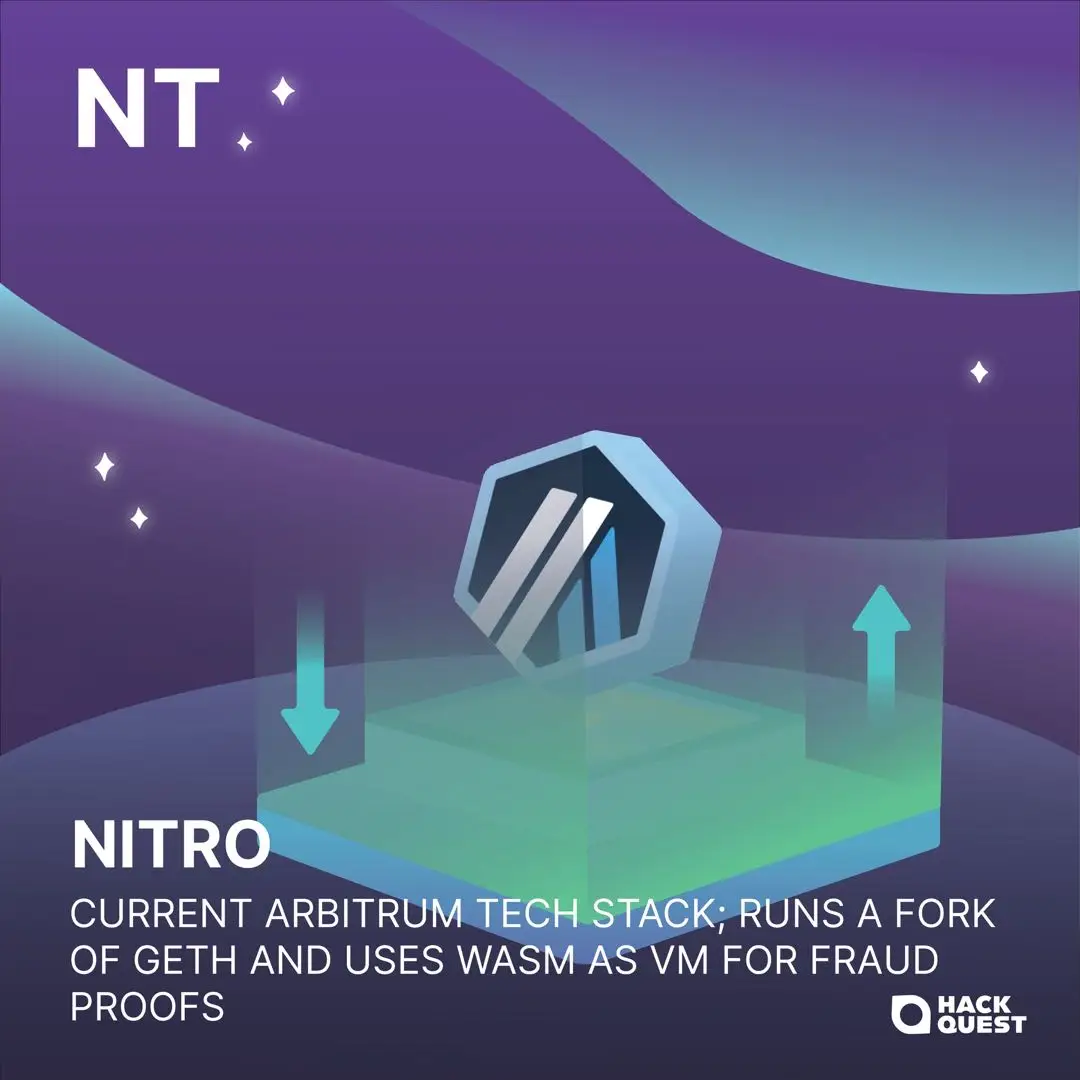
Arbitrum Nitro reimagined the L2 execution layer by swapping out the traditional EVM client for a hybrid approach. Instead of running the full Ethereum Virtual Machine in Go, Nitro utilizes a WebAssembly (WASM) host that executes a precompiled version of Geth. This architectural shift allows Arbitrum to run standard Ethereum client code natively within a high-performance runtime, bridging the gap between legacy compatibility and modern speed.
The core of this system is the Nitro WASM host, which acts as the foundation for the Geth precompile. When a transaction arrives, the WASM environment loads the Geth binary, which is compiled into a format WASM can execute. This precompile handles the heavy lifting of EVM execution, processing state transitions and smart contract logic with significantly less overhead than the previous generation. Because the EVM logic is now a precompile, it avoids the performance penalties of interpreting bytecode in a slower virtual machine.
This change delivers tangible improvements in gas efficiency and throughput. By leveraging WASM’s faster execution capabilities, Nitro reduces the computational cost of running EVM opcodes, leading to lower gas fees for users. The architecture also simplifies the codebase, making it easier for developers to maintain and for the network to scale. As a result, Nitro offers faster finality and higher throughput, making it a more robust foundation for DeFi applications and high-frequency trading.
Gas fees and throughput improvements
Arbitrum Nitro fundamentally changed the economics of the network by replacing the custom ProverVM with a hybrid architecture. By running EVM code directly via Geth inside WebAssembly (WASM), Nitro eliminated the heavy compilation overhead that defined the Classic era. This shift allowed the network to process transactions much closer to native Ethereum speeds, while significantly reducing the computational burden on the sequencer.
The result is a stark contrast in user experience. Classic transactions often felt sluggish, with execution times that could drag on due to the complex translation layers. Nitro transactions are nearly instantaneous for the user, offering a speed that feels indistinguishable from L1 operations. This efficiency is not just about waiting less; it is about the underlying cost structure becoming sustainable at scale.
Gas costs dropped dramatically because the WASM environment is far more efficient at executing standard EVM opcodes than the previous system. For DeFi users and developers, this means complex interactions like multi-hop swaps or intricate smart contract calls are now viable without prohibitive fees. The following table breaks down the measurable differences between the two architectures.
| Metric | Classic | Nitro | Impact |
|---|---|---|---|
| Execution Engine | ProverVM (Custom) | Geth + WASM | Native EVM compatibility |
| Transaction Speed | Slower (high latency) | Near-instant | Better UX for DeFi |
| Gas Fees | Higher | Significantly lower | Cost-effective scaling |
| EVM Compatibility | Partial (EVM-equivalent) | Full (EVM-equivalent) | No code changes needed |
These metrics highlight why Nitro became the standard. The move to WASM did not just optimize performance; it aligned Arbitrum more closely with the broader Ethereum ecosystem. Developers can now deploy existing Solidity contracts without modification, knowing they will run efficiently on the new stack. This technical alignment is the primary driver behind the network's continued growth and adoption.
EVM equivalence and developer impact
Arbitrum Nitro achieves full EVM equivalence by rewriting the core execution engine in Go and WebAssembly (WASM). This architectural shift replaces the previous Python-based code with a native Geth client, allowing Nitro to interpret Ethereum bytecode directly without modification. For developers, this means the "write once, deploy anywhere" promise becomes a practical reality rather than a theoretical ideal.
When migrating a decentralized application (DApp) from Ethereum Layer 1 or other Layer 2 networks, you no longer need to refactor smart contracts to accommodate specific virtual machine quirks. Nitro supports all EIP-1559 features, including blob transactions and precompiles, ensuring that your existing Solidity code runs exactly as it does on Ethereum Mainnet. This compatibility eliminates the friction of testing for edge-case execution differences, significantly reducing the risk of deployment errors.
The technical uniformity extends to developer tooling. Popular frameworks like Hardhat, Foundry, and ethers.js work out of the box without custom RPC endpoints or specialized adapters. You can deploy contracts using standard scripts, and the gas estimation logic remains consistent with Ethereum standards. This seamless integration allows teams to focus on product development rather than infrastructure debugging.
Comparison: Nitro vs. Classic Execution
The following table highlights the technical differences in execution environments that impact developer workflows.
| Component | Classic (WAVM) | Nitro (Geth/WASM) |
|---|---|---|
| Execution Engine | Python-based WAVM | Geth (Go) |
| Bytecode Support | Partial EVM | Full EVM |
| Precompiles | Limited | All Ethereum Precompiles |
| Tooling Compatibility | Requires adapters | Native support |
This equivalence simplifies the upgrade path for existing projects. If your DApp runs on Ethereum, it will run on Nitro with minimal configuration. The only changes required are typically network parameter updates in your frontend or backend services, pointing to the new RPC endpoints. This reduces the cognitive load on engineering teams and accelerates time-to-market for new deployments.
Migrating Existing DApps to Nitro
Moving from Arbitrum One (Classic) to Nitro is largely a backend transition. Because Nitro maintains EVM equivalence through its WASM execution engine, most smart contracts require zero code changes. The migration is designed to be seamless for developers, with the primary work involving infrastructure updates and verification rather than contract refactoring.
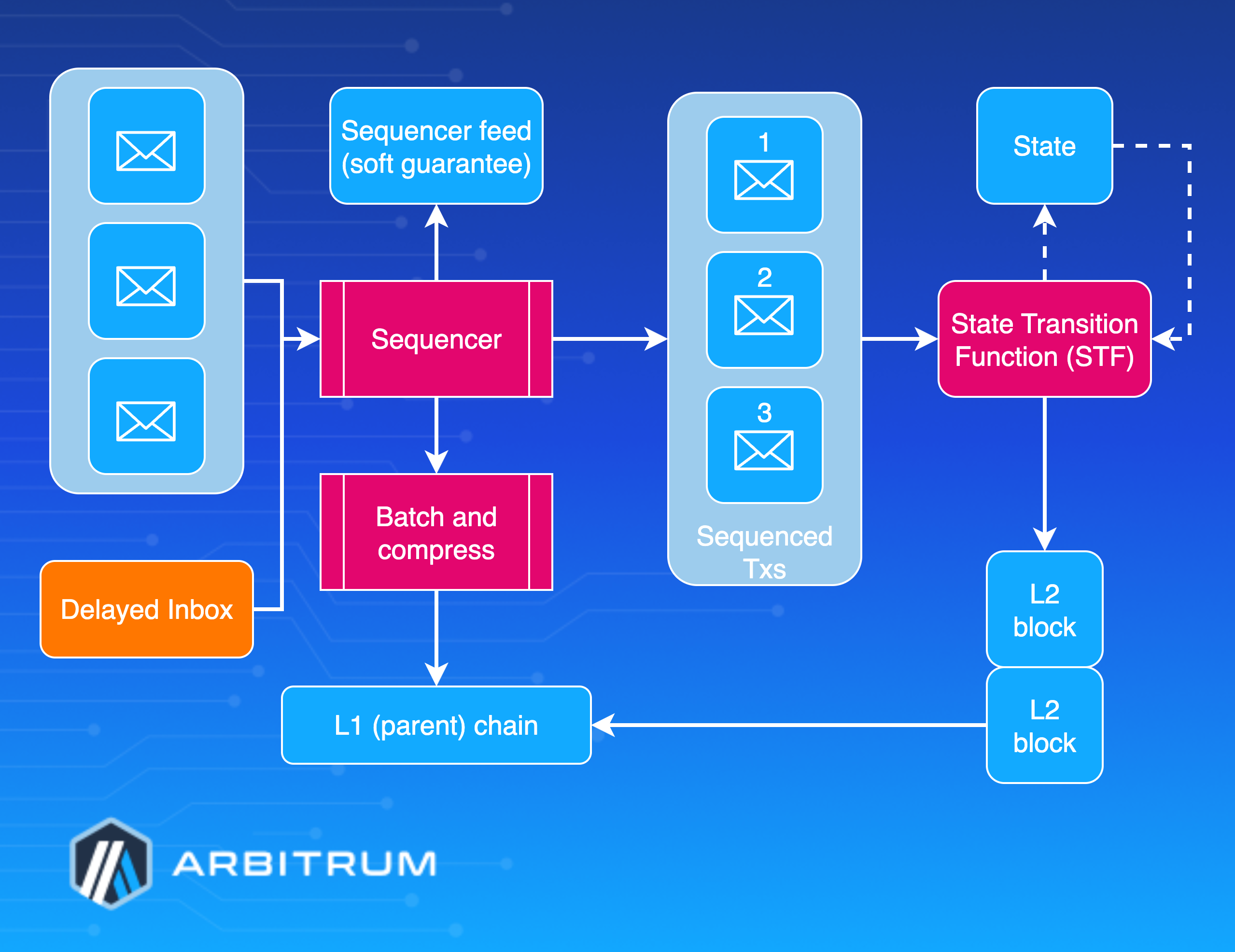
Nitro nodes use a different binary structure than their predecessors. While public RPC endpoints usually handle this transparently, self-hosted node operators must rebuild or pull the latest Nitro binaries. Verify your node is syncing the Nitro chain state to ensure full compatibility with new gas estimation logic.
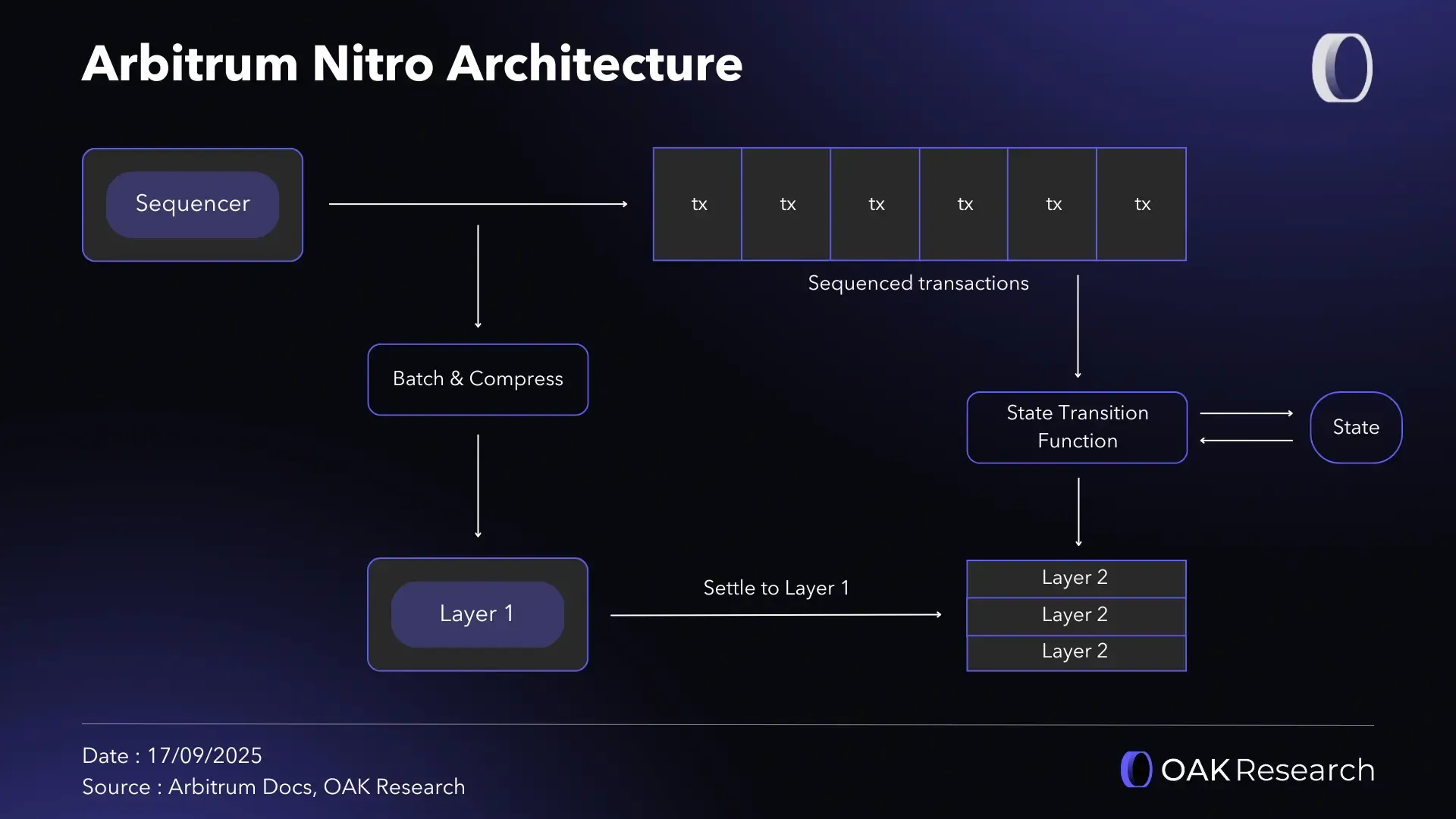
Before touching mainnet, spin up a local Nitro dev node. This allows you to test contract interactions against the new WASM engine. The official documentation provides clear instructions for building Nitro locally on Debian, Ubuntu, or macOS to simulate the production environment accurately.
Nitro changes how gas is calculated and reported. While most EVM tools work out of the box, some advanced dApps rely on precise gas estimation for complex off-chain logic. Run a suite of integration tests to ensure your gas limits align with Nitro’s more efficient execution model.
Though rare, certain low-level opcodes or precompiles may behave differently under the new engine. Check your contract’s dependency list against Nitro’s supported precompiles. If your dApp uses obscure cryptographic libraries, verify they are supported in the WASM environment.
The transition is primarily an infrastructure upgrade. By updating your node software and running standard test suites, you can move to Nitro with confidence that your contracts will execute exactly as they did on Classic.
Common questions about Arbitrum Nitro
What is Arbitrum Nitro?
Arbitrum Nitro is a second-generation Layer 2 protocol that replaces the previous system's EVM execution environment with a WASM-based Virtual Machine. This architectural shift allows the sequencer to process transactions using a high-performance Geth client combined with the off-chain prover.
The result is a significant increase in throughput and faster finality. Nitro also streamlines dispute resolution by using a single, optimized prover, which reduces the time required to resolve fraud proofs and lowers the overall cost of running the network.
Does Arbitrum have a future?
The long-term viability of Arbitrum depends on its ability to maintain technical superiority in a competitive Layer 2 landscape. Nitro provides the foundational efficiency needed to support complex DeFi applications and high-frequency transactions.
As the ecosystem expands, the focus remains on improving scalability and reducing gas costs through continuous protocol upgrades. The transition to Nitro demonstrates a commitment to staying at the forefront of blockchain technology, ensuring the network remains relevant for developers and users.
Can Arbitrum reach $10 or $100?
Price predictions are speculative and outside the scope of this technical comparison. This article focuses on the architectural differences, gas efficiency, and speed improvements that Nitro brings to the Arbitrum network.
Investment decisions should be based on thorough research and individual risk tolerance. For a deeper understanding of the technical capabilities, refer to the official Arbitrum documentation.
No comments yet. Be the first to share your thoughts!